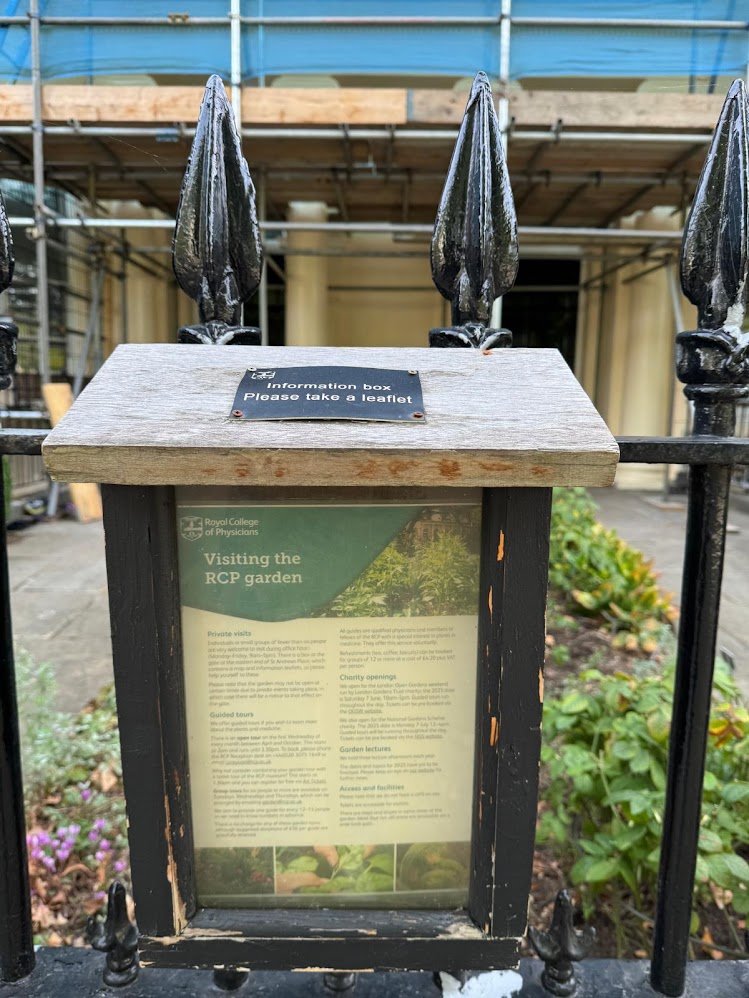
A group of 13 Poly Ramblers gathered at the meeting place outside the Royal College of Physicians (RCP), eager to begin the tour at 11am. However, the tour guide had not noted the date into his diary and therefore did not show. On making enquiries, we were informed he could get to us by 12:30. One person was not able to stay due to an afternoon commitment. Being near Regents Park and Great Portland Street, a couple of people went to look at the Queen Elizabeth Garden. The rest of the group took the opportunity to grab some food and drink. We were thankful to staff at Honey & Co., who accommodated us and served us in a timely manner.
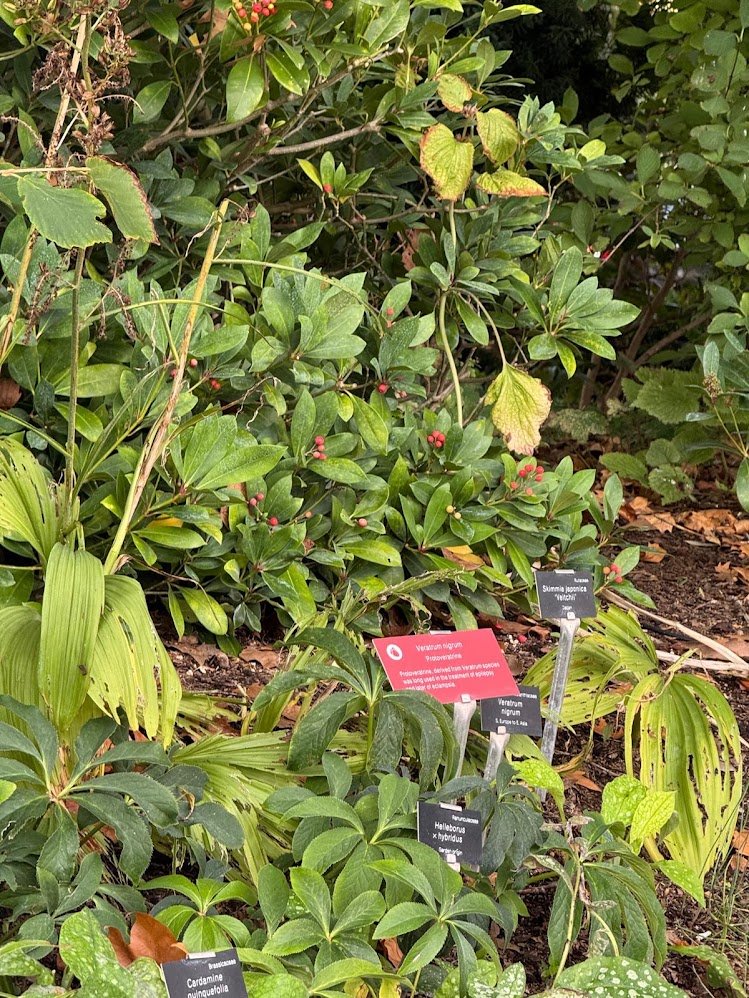
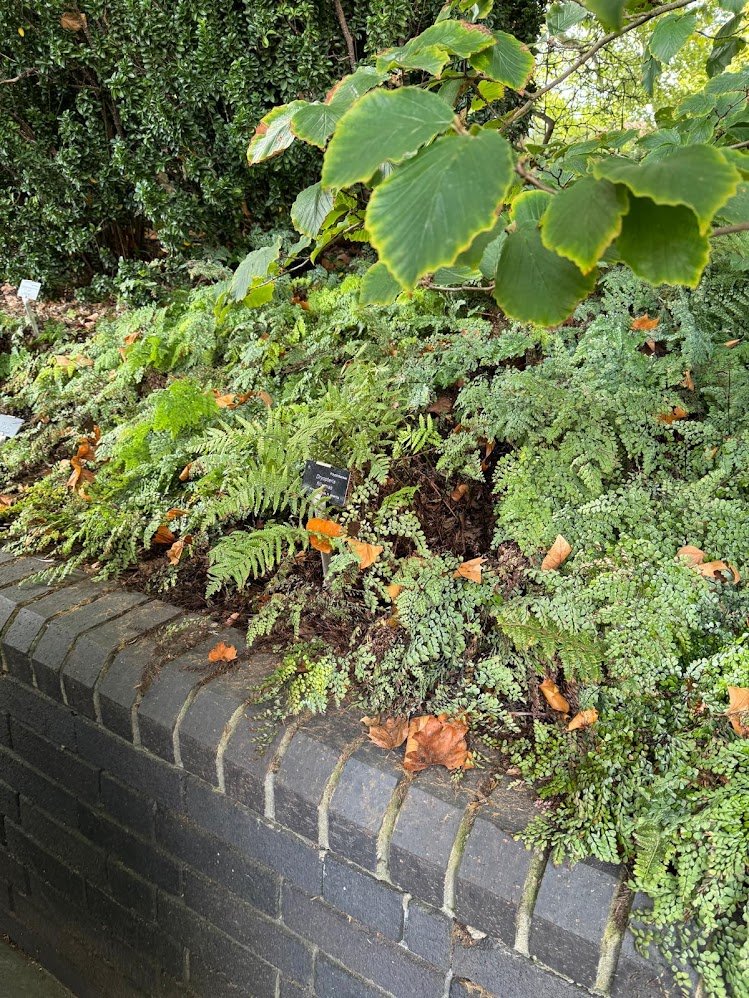
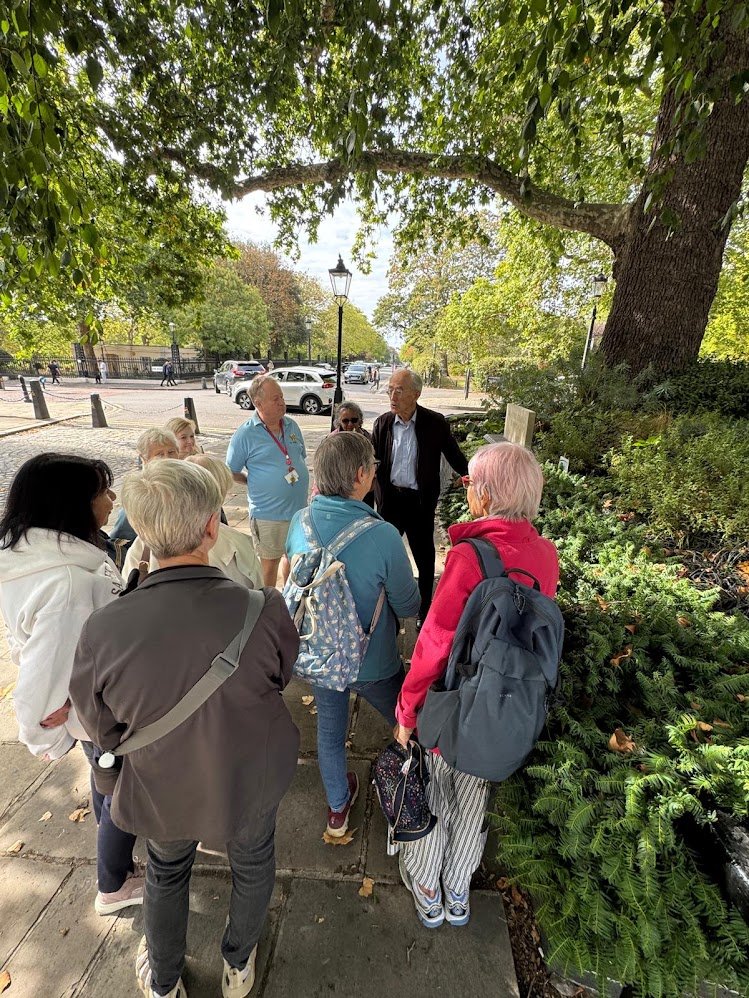
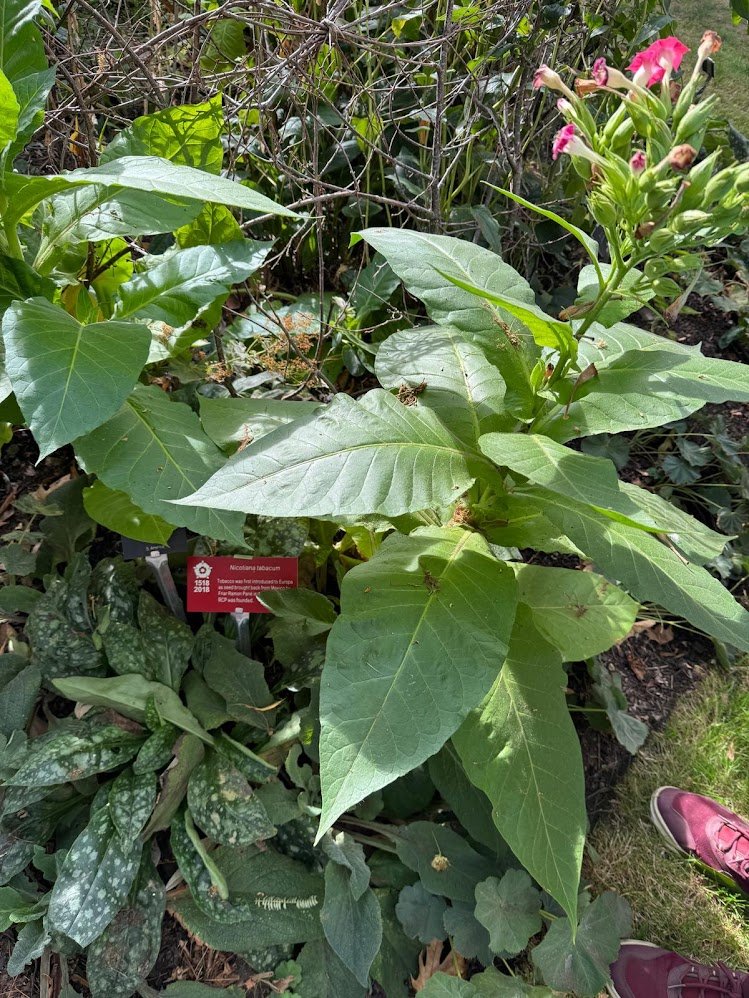
On returning to the RCP, we were greeted by Dr. Henry Oakeley FRCP, a very knowledgeable tour guide and Garden Fellow of the RCP Medicinal Garden. The initial introduction stated there were many thousands of plant species within the garden. All plants are poisonous. The garden plants are laid out by the continents from which they originate.
‘Plants that evolved poisons survived: of the 400,000 plants on the planet, most are harmful if eaten or touched. A few contain chemicals which are the basis for modern medicines; even fewer are edible. This garden is a living museum to their historical and current uses.’ Dr. Henry Oakeley FRCP, Garden Fellow RCP
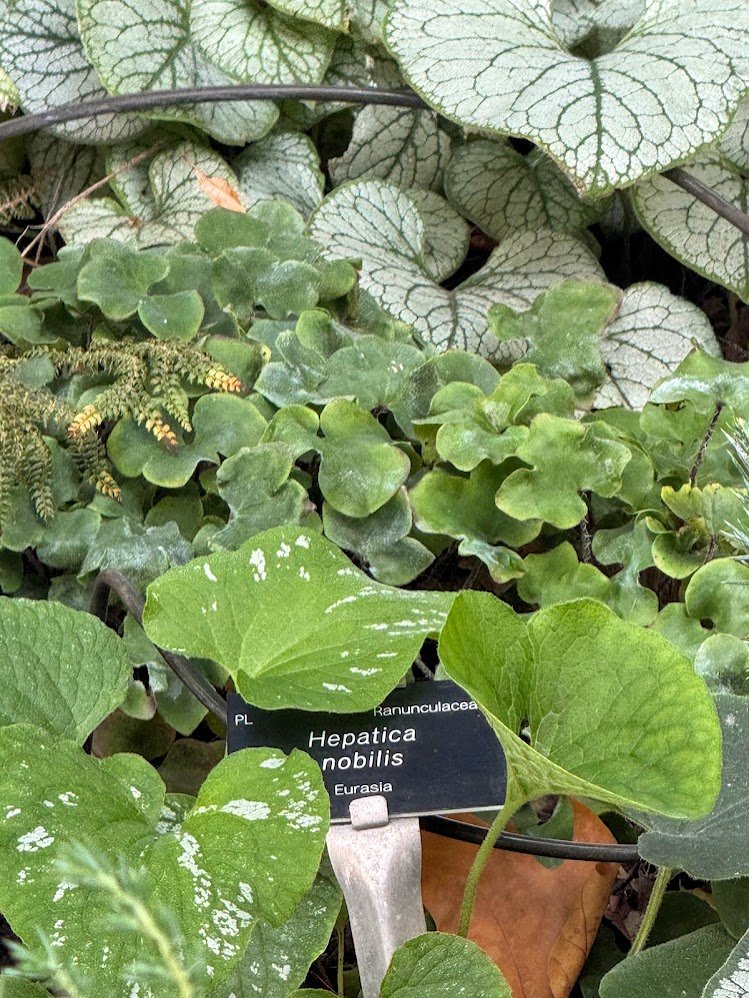
The tour began by Dr. Oakeley showing us a leaf from the plant Hepatica nobilis. This leaf has three lobes, like the liver, which also has three lobes. This plant was used to treat liver disorders, until they found it caused jaundice, therefore a liver poison!
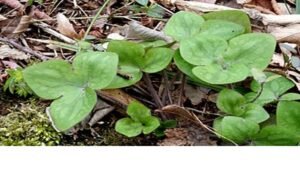
There were many interesting tales and stories narrated during the tour, too many for me to remember and to note here. I asked the group to highlight what they took away.
‘All plants being poisonous’.
‘I thought ‘the professor’ was quirky and fascinating he did treat us a bit like naughty school children, but it was fun. It made me realize how little I know about science and Latin and want to learn more about plants.
“I wish it had been longer to learn more about plants. I will look at my garden in a different way! Plants are amazing – and poisonous but this downside also results in cures for many illnesses. But it takes so much research!”
“a seed as poisonous as ricin could be used as a method of killing and also as a necklace for children.”
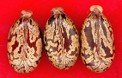
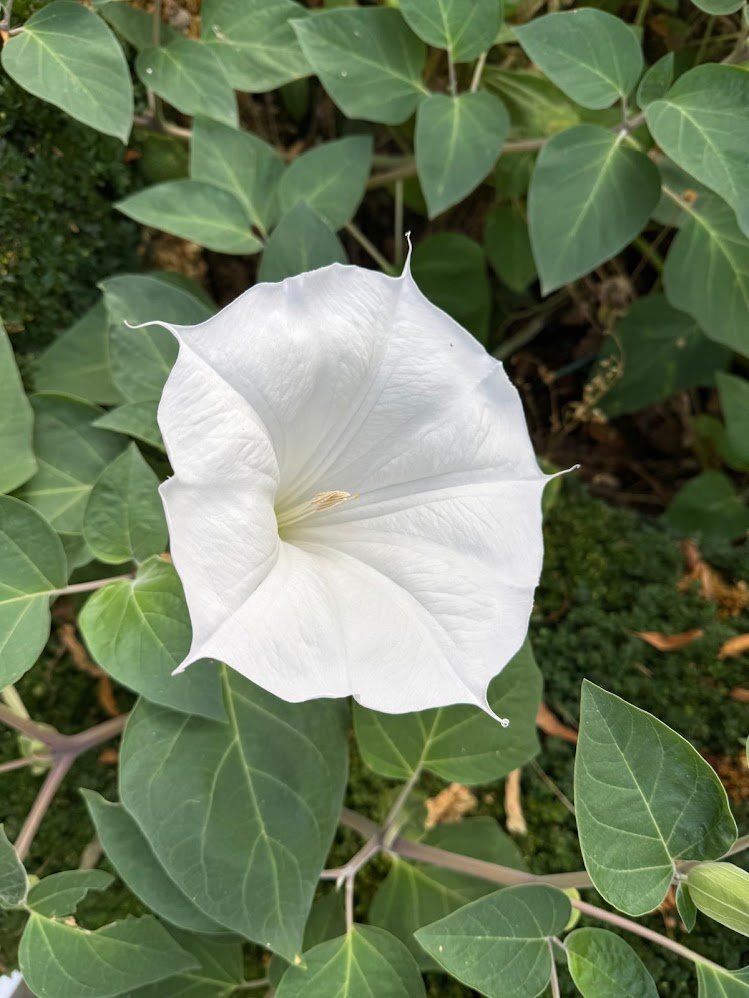
“I found the story about Taxol very interesting. Also, talking about tobacco and poppy plants. When he started to talk about Datura, it reminded of my first trip to Kew with mum. She was so pleased to see the flower she grew up with.”
“I was fascinated by the number of plants that can be used medicinally but are also toxic. I enjoyed hearing about the Yew Tree as it is my favourite tree!”
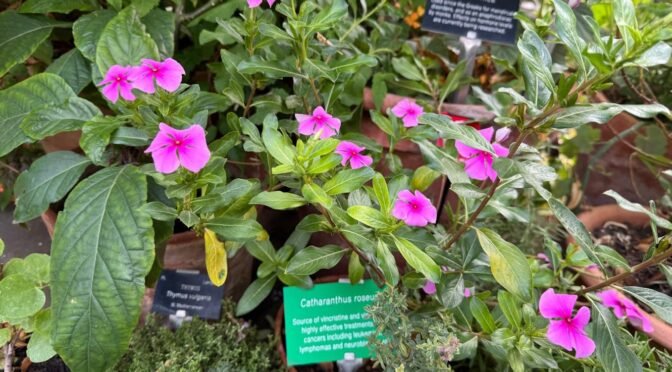
“The Madagascan Periwinkle, used as the drug Vincristine within chemotherapy for treating leukaemia has provided much hope for achieving remission of the disease’”
As you can see from the comments there was much to learn and absorb. We all enjoyed the tour and were extremely glad we returned rather than cancelled on this occasion. Dr. Oakeley did send an email to apologise and noted it was all his error; the communication to organise the tour followed.
The garden and RCP museum are open daily, and anyone can call in. Visitors of up to five people can visit Mon -Fri 9am – 5pm. Free entry. There are guided open tours given by fellows of the RCP on the first Wednesday of the month at 2pm (April – October). To book call +44 (0) 20 3075 1649 ask for reception. Tours are free. Voluntary donations are used towards the garden upkeep.
Royal College of Physicians, 11 St. Andrews Place, Regents Park, London NW1 4LE
Further Information www.rcp.ac.uk/about-us/rcp-garden-of-medicinal-plants
Carol D’Souza. Photos by Ida and Carol