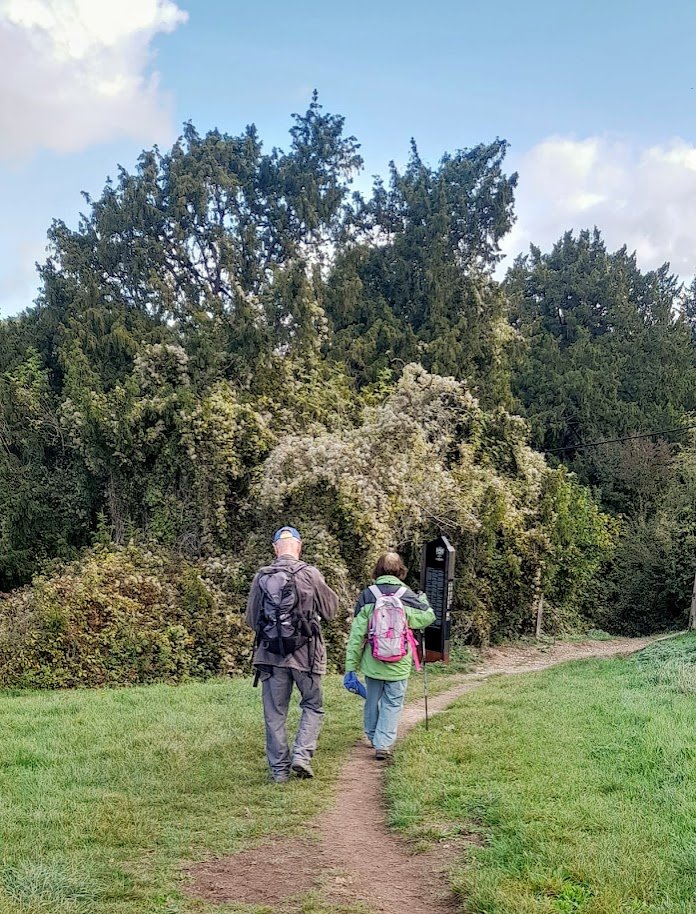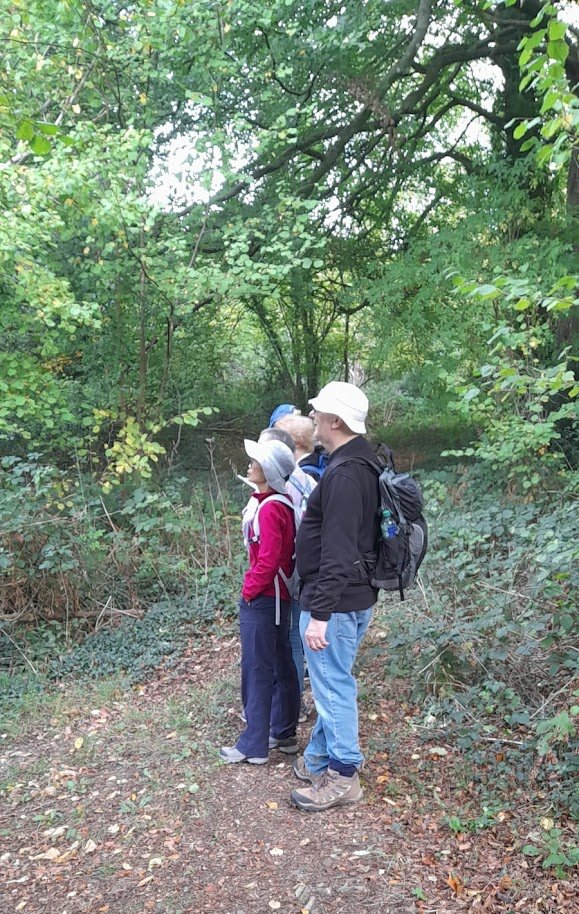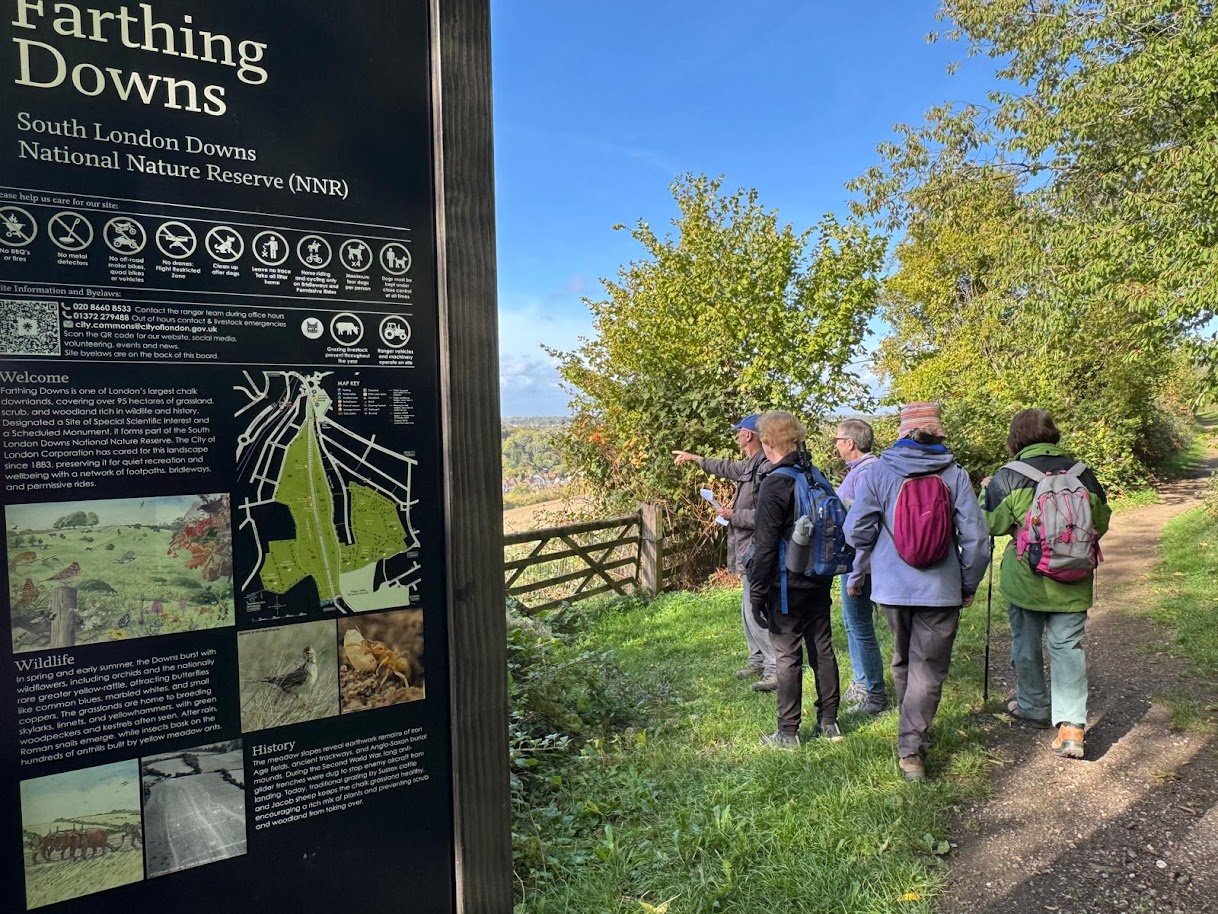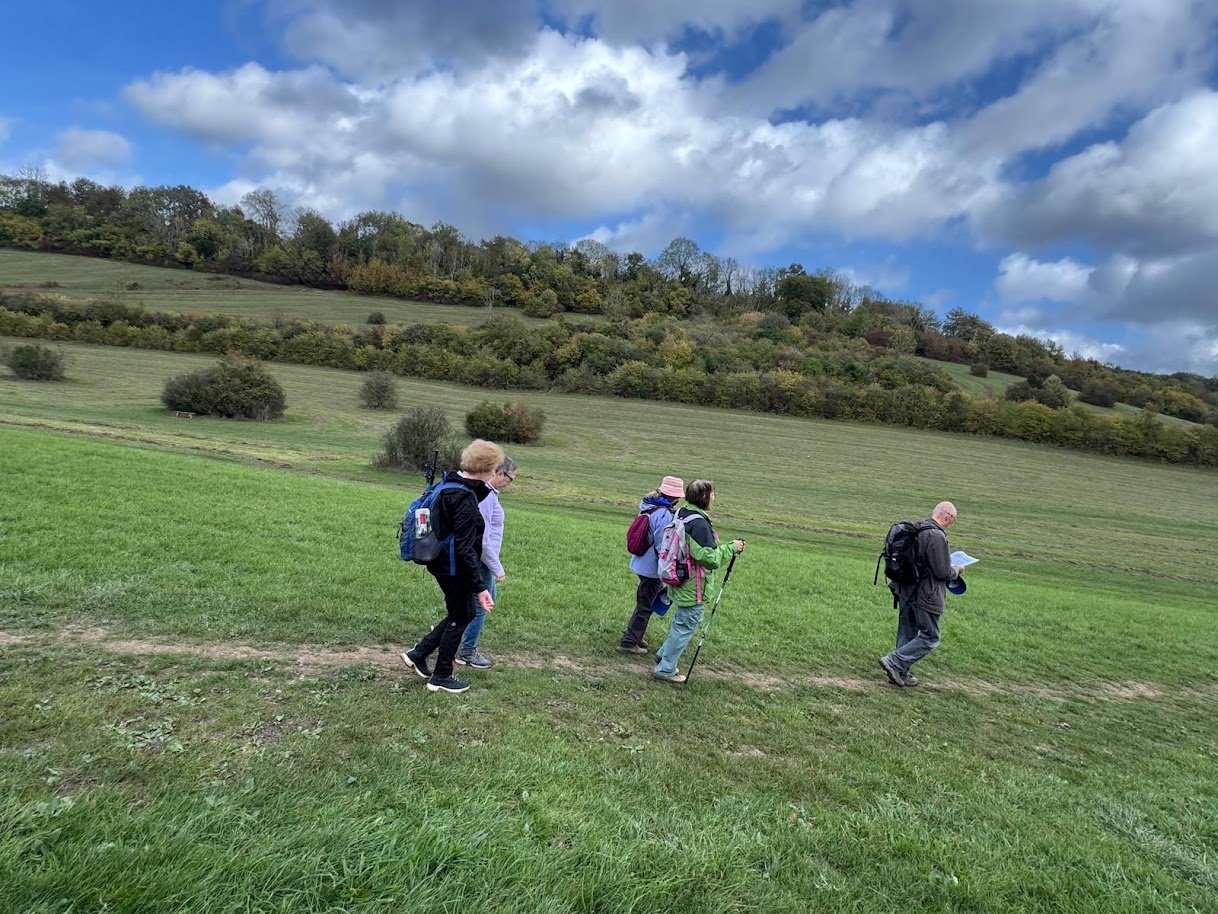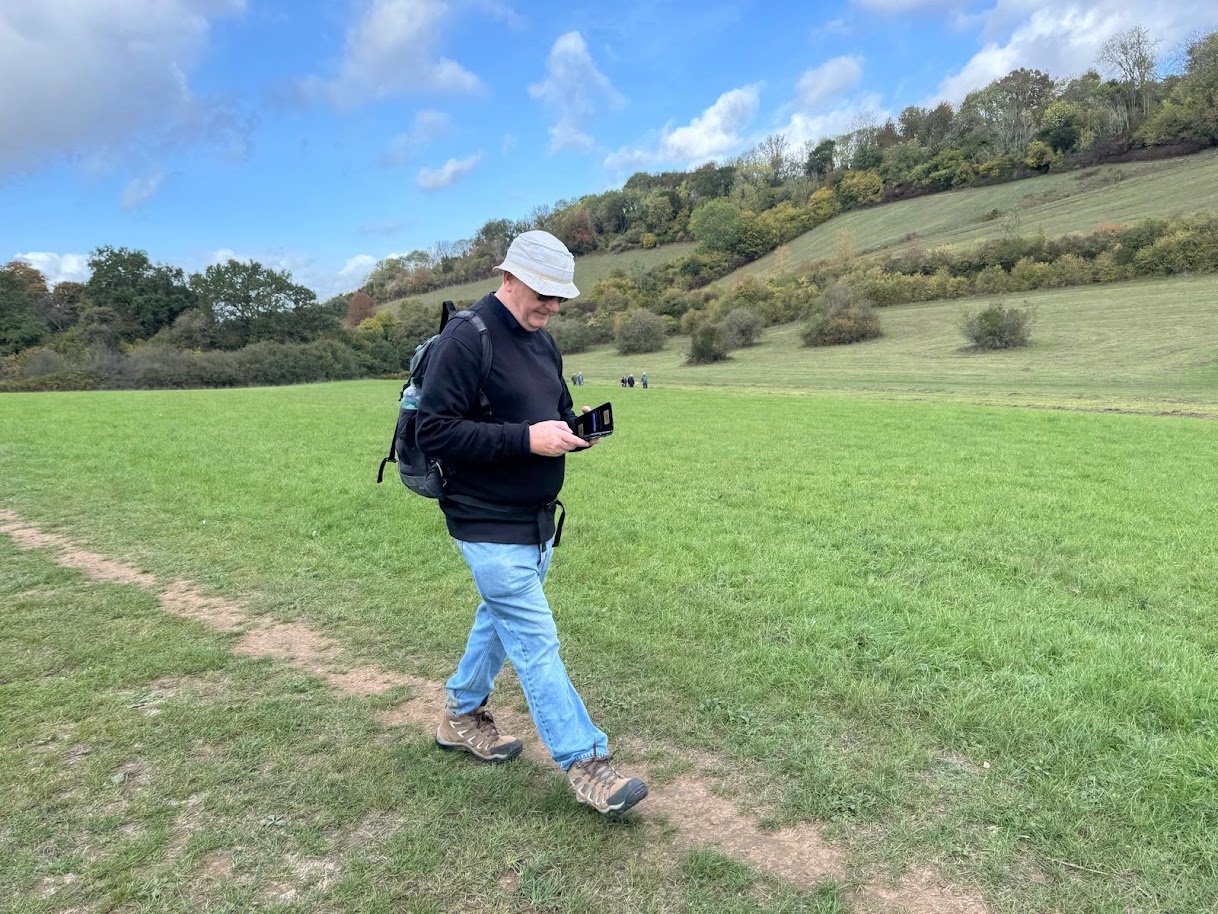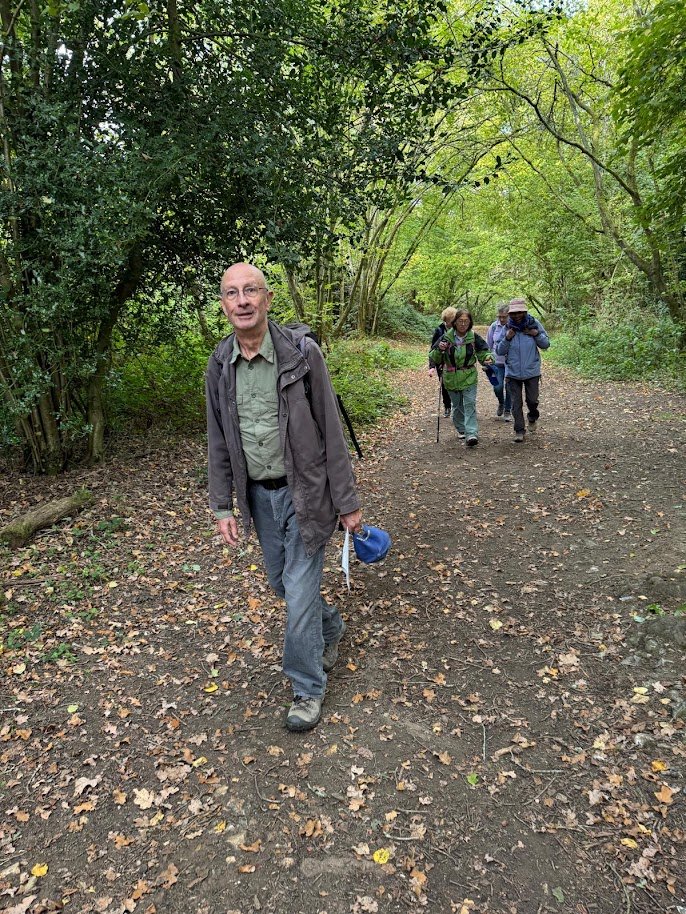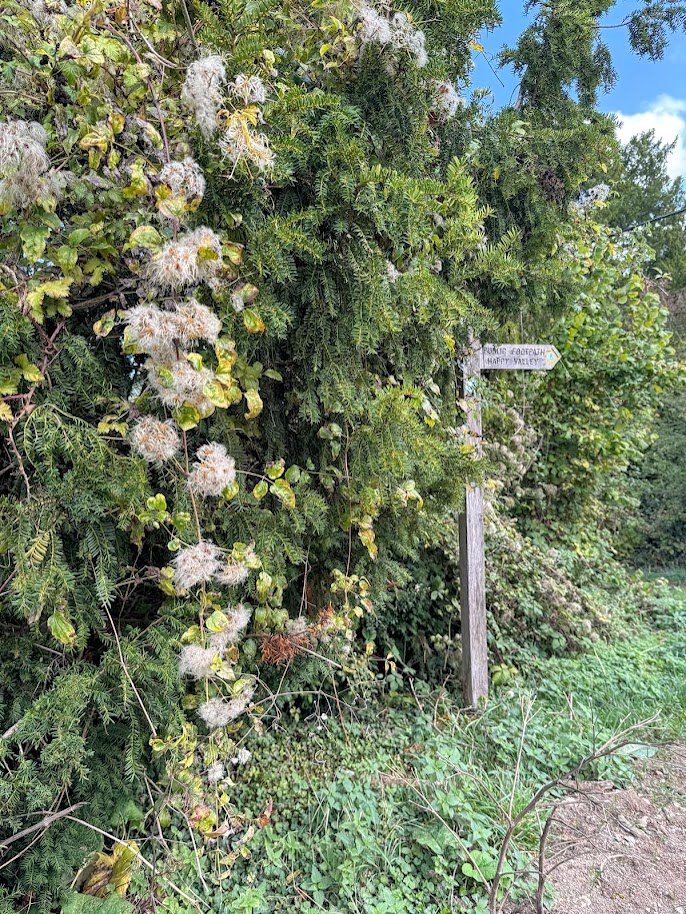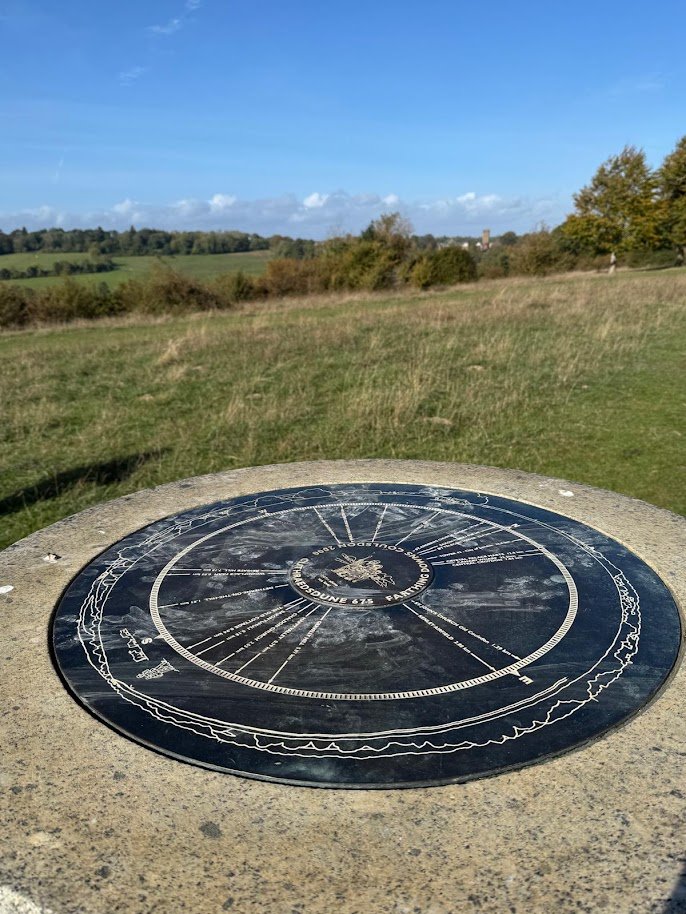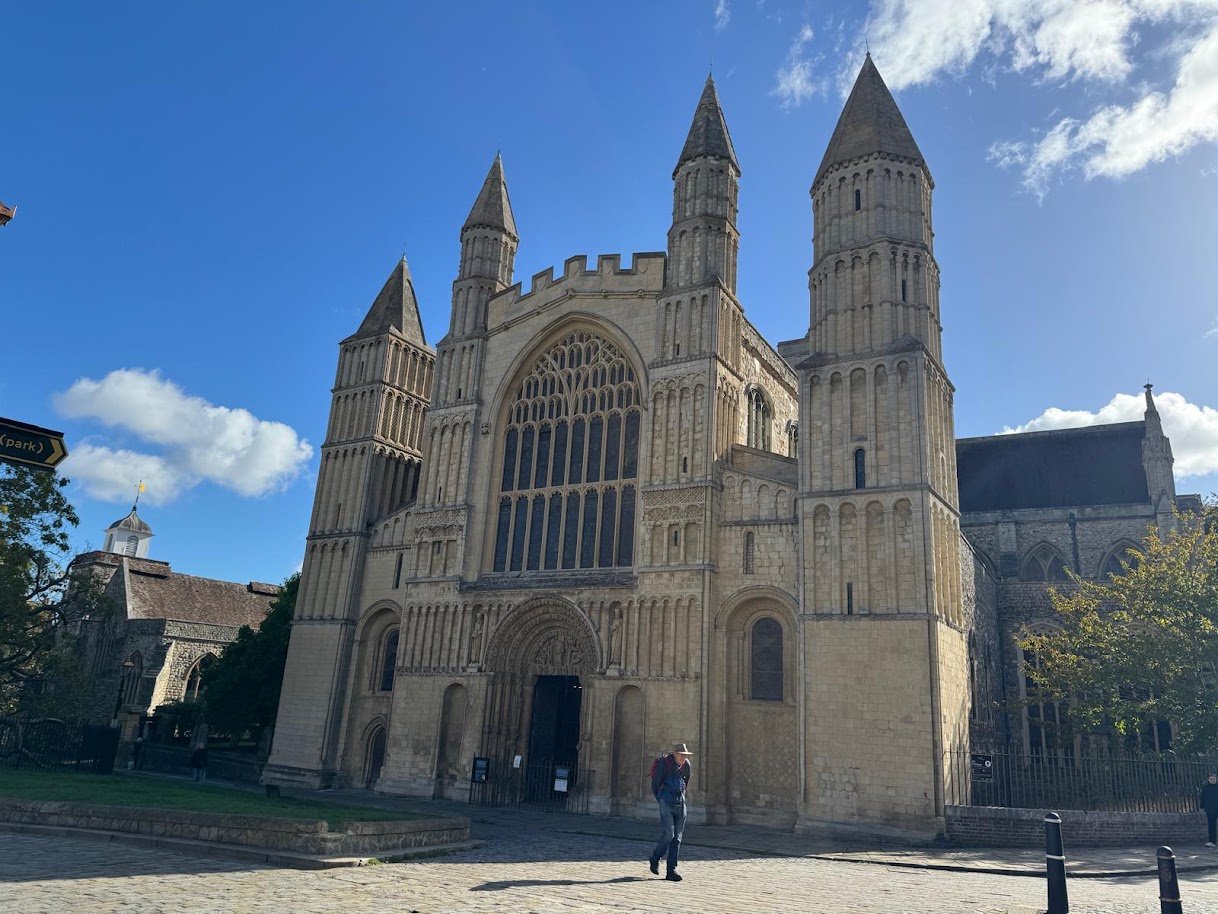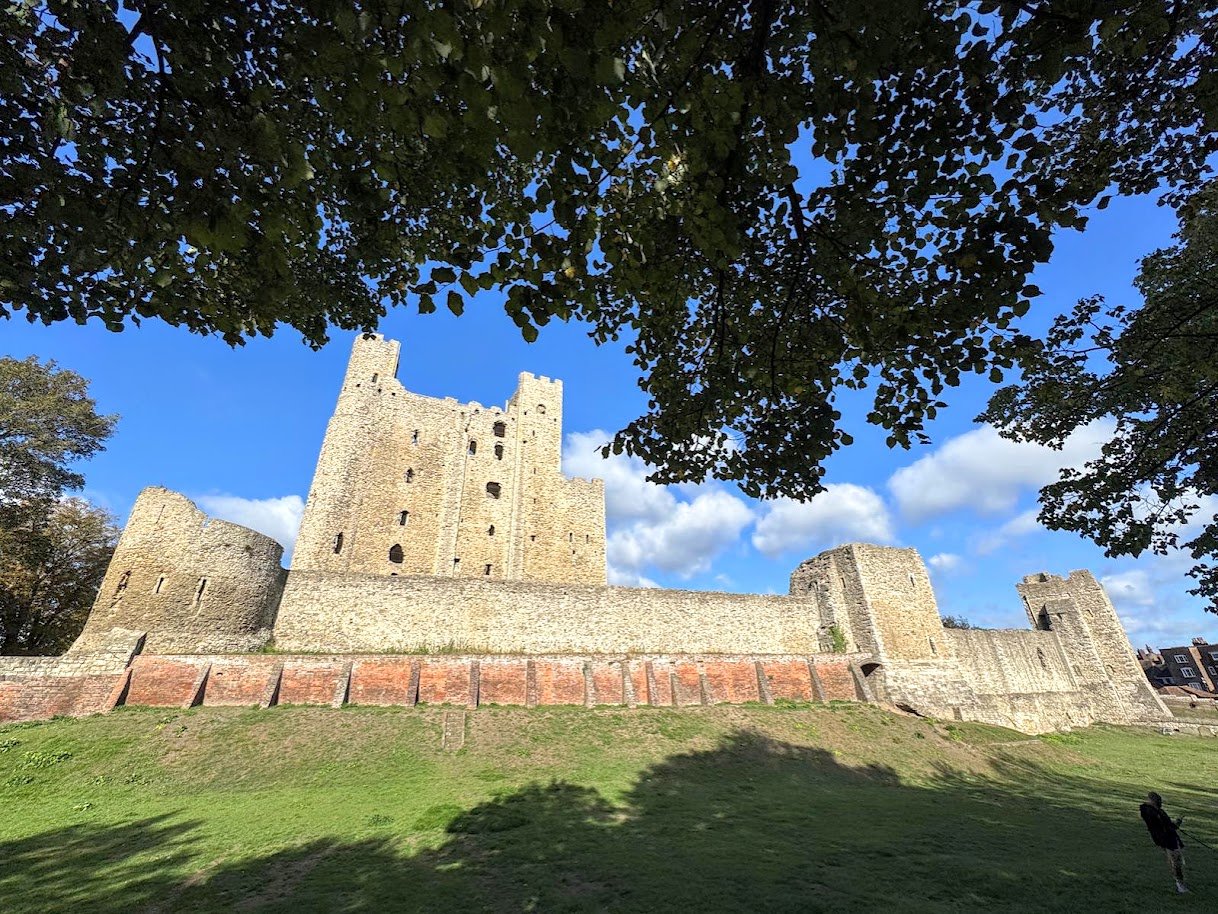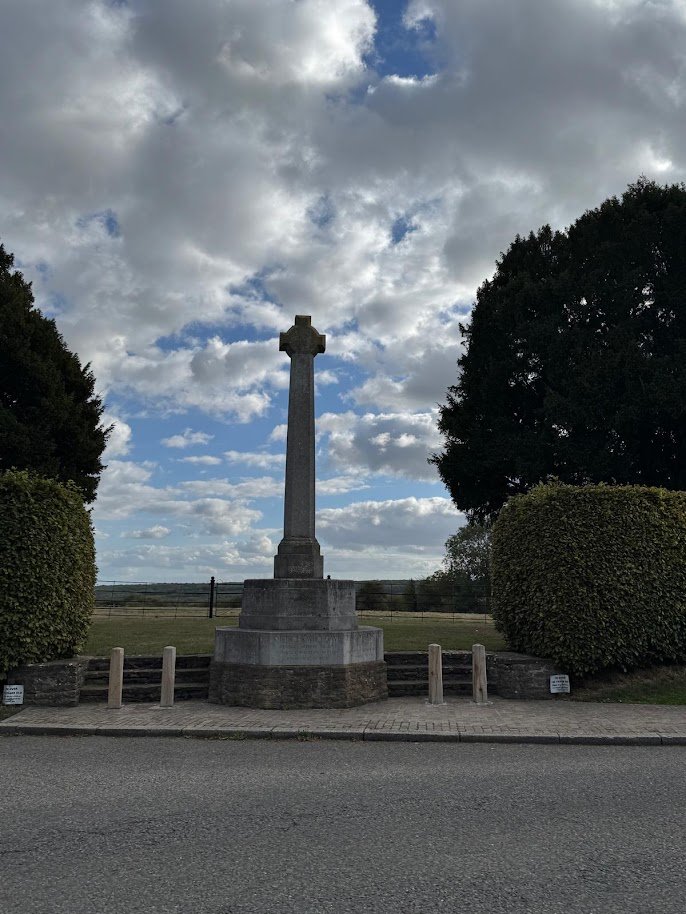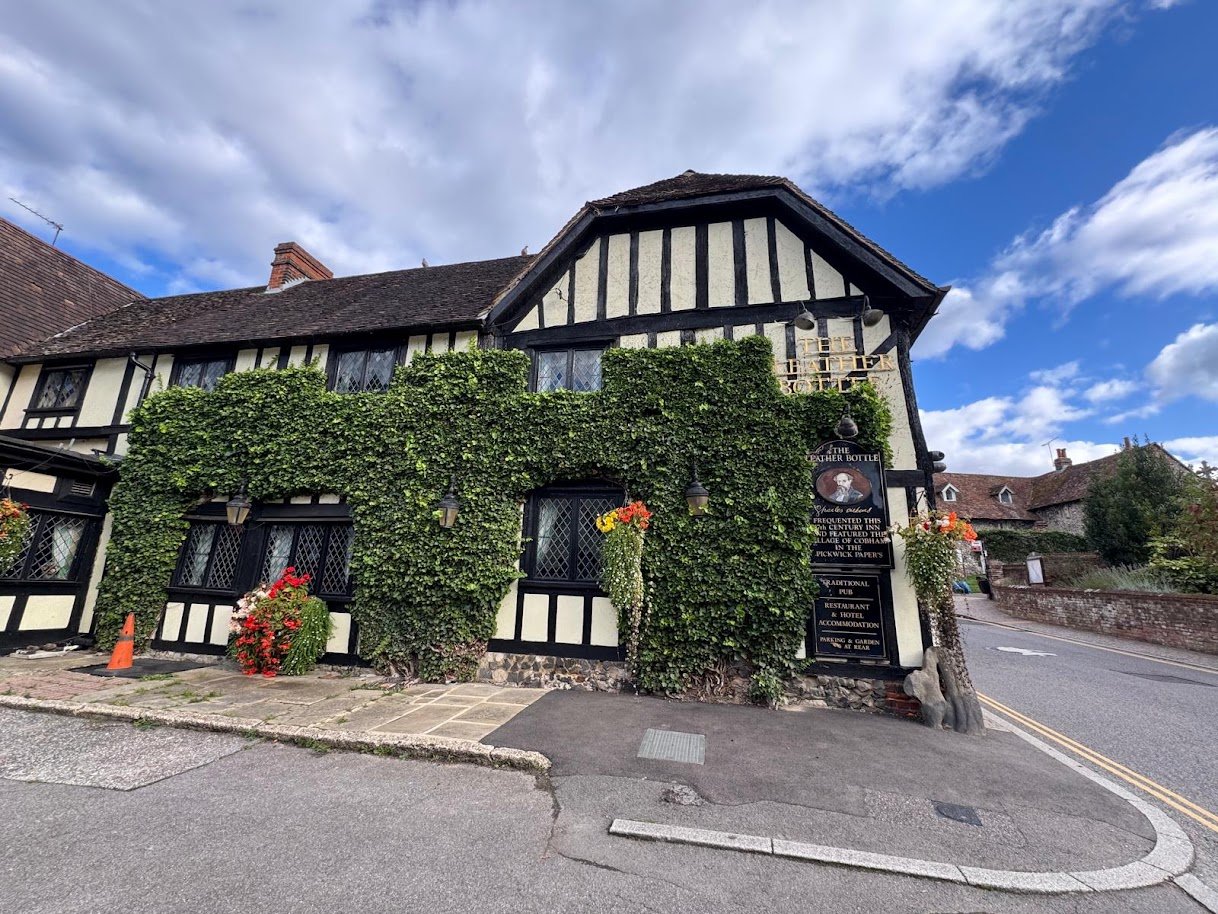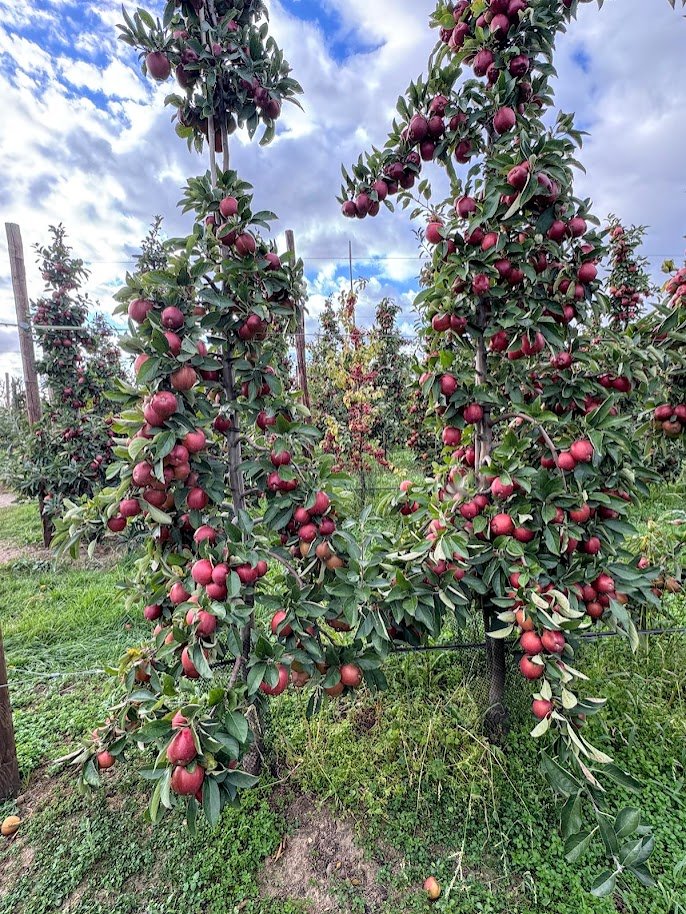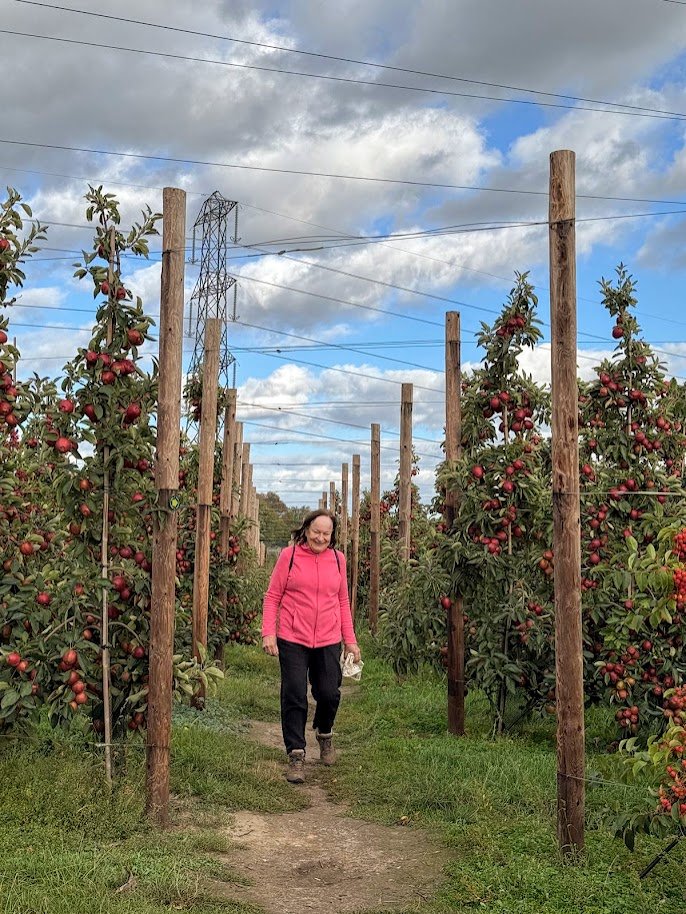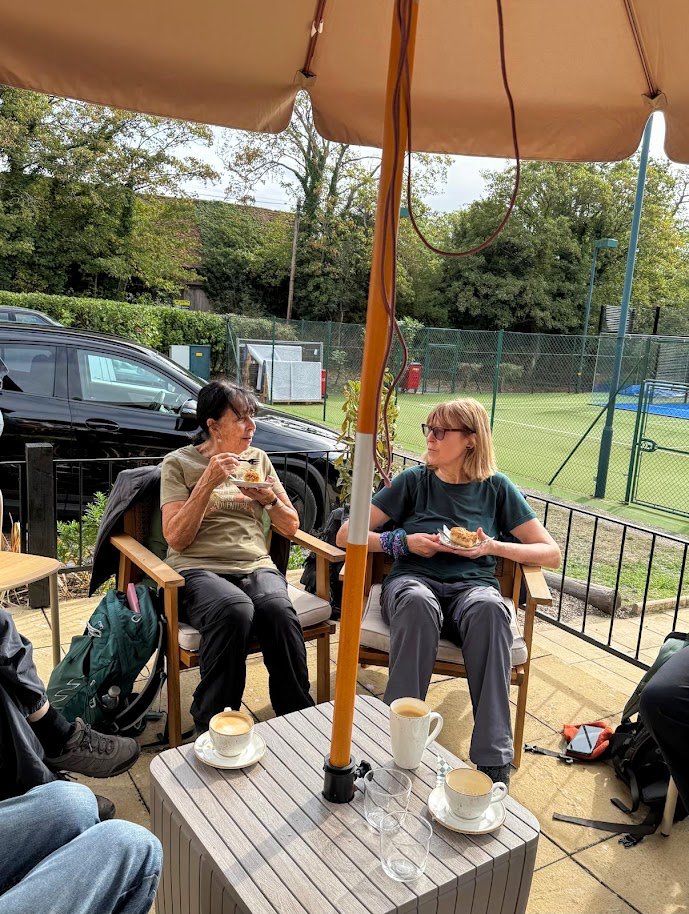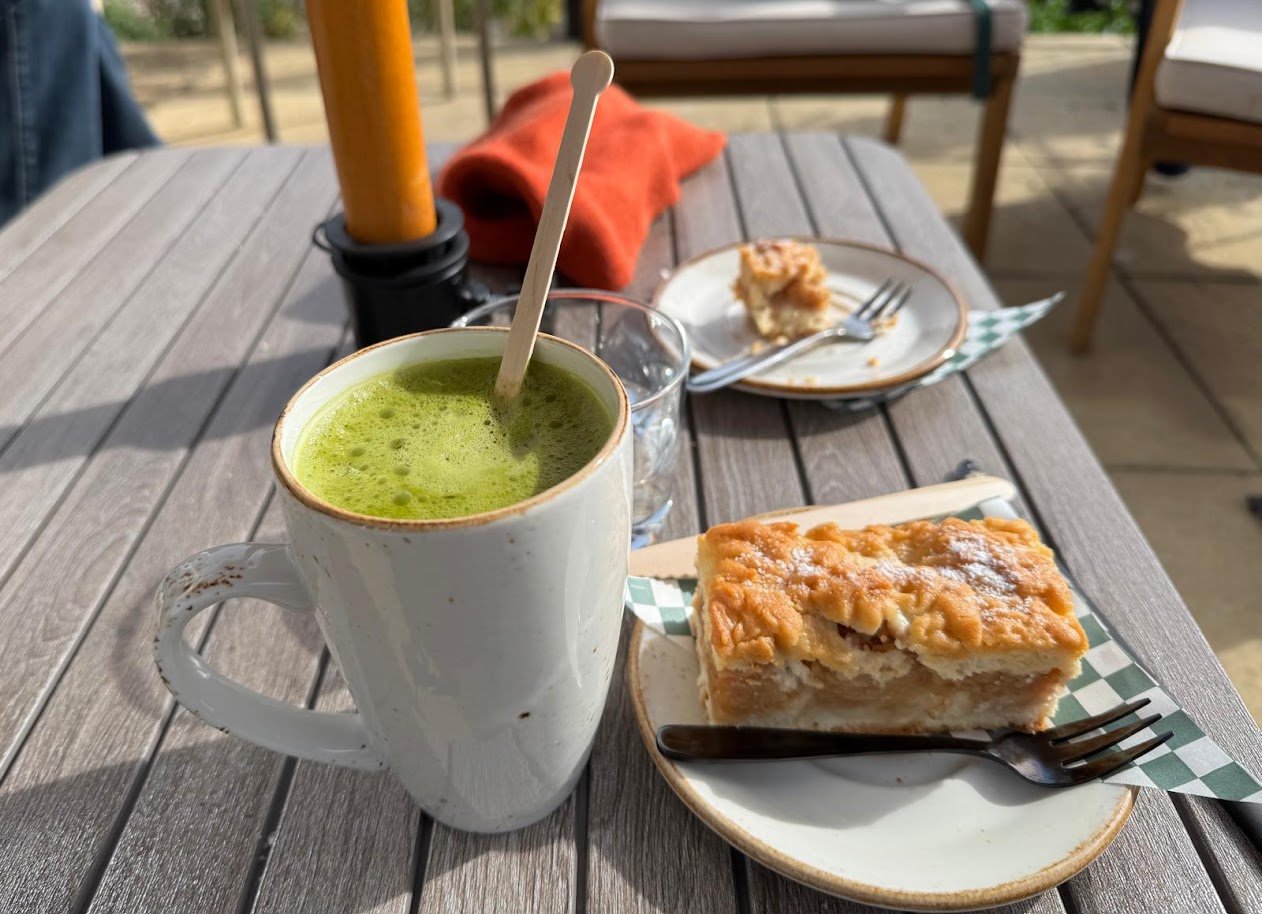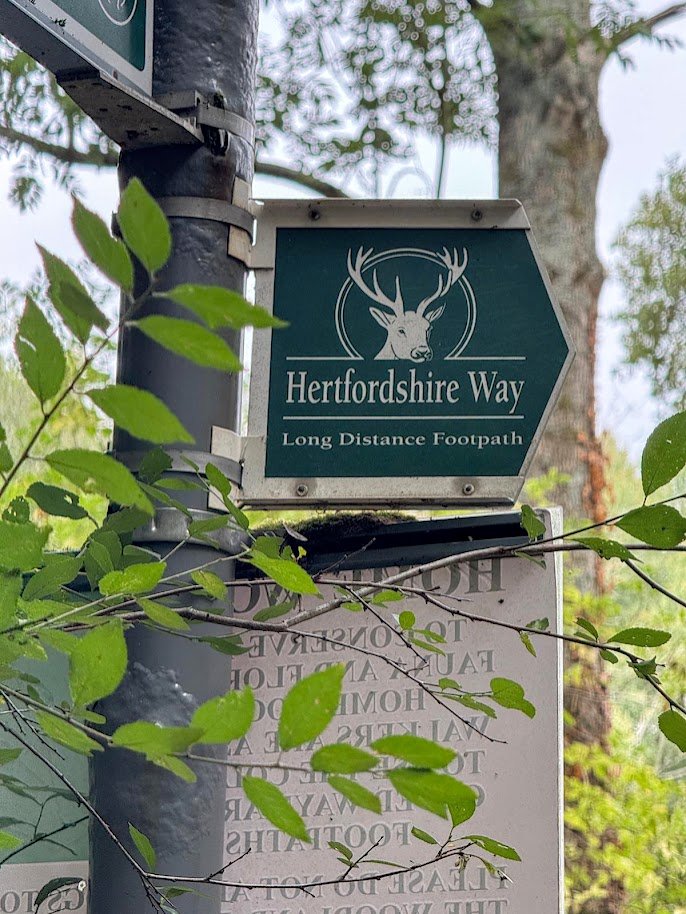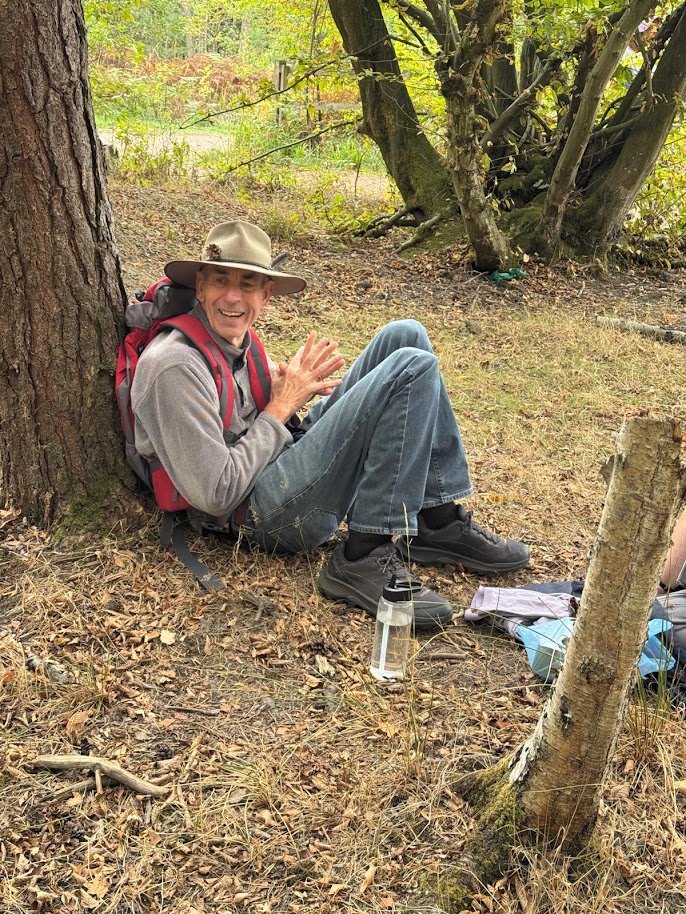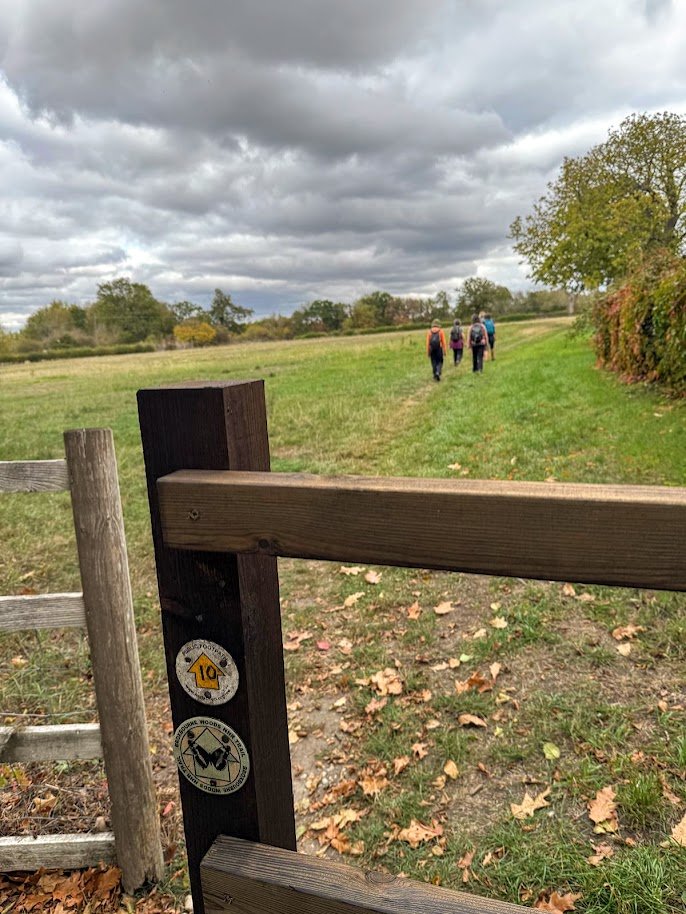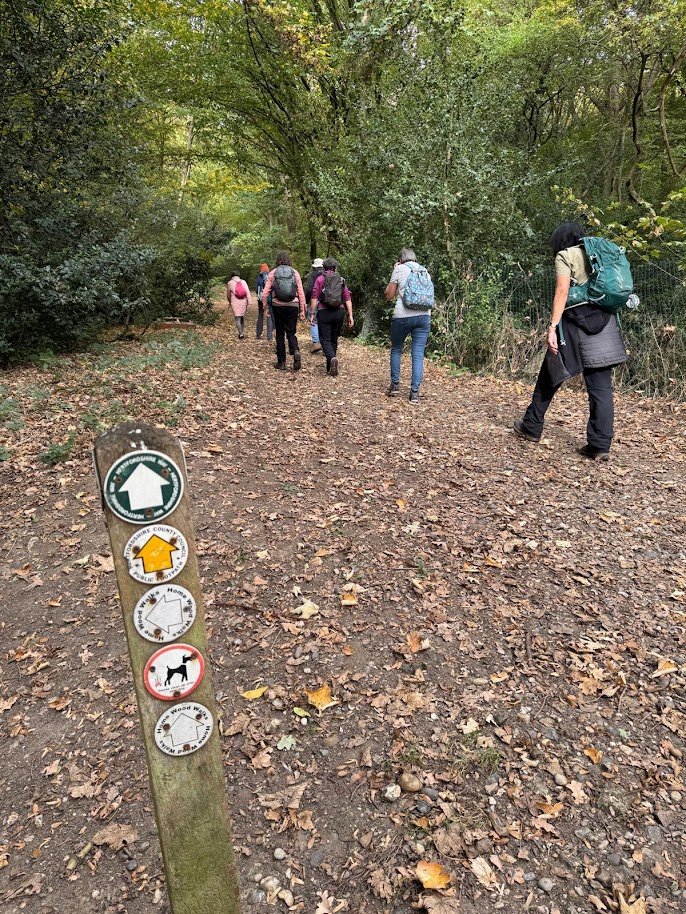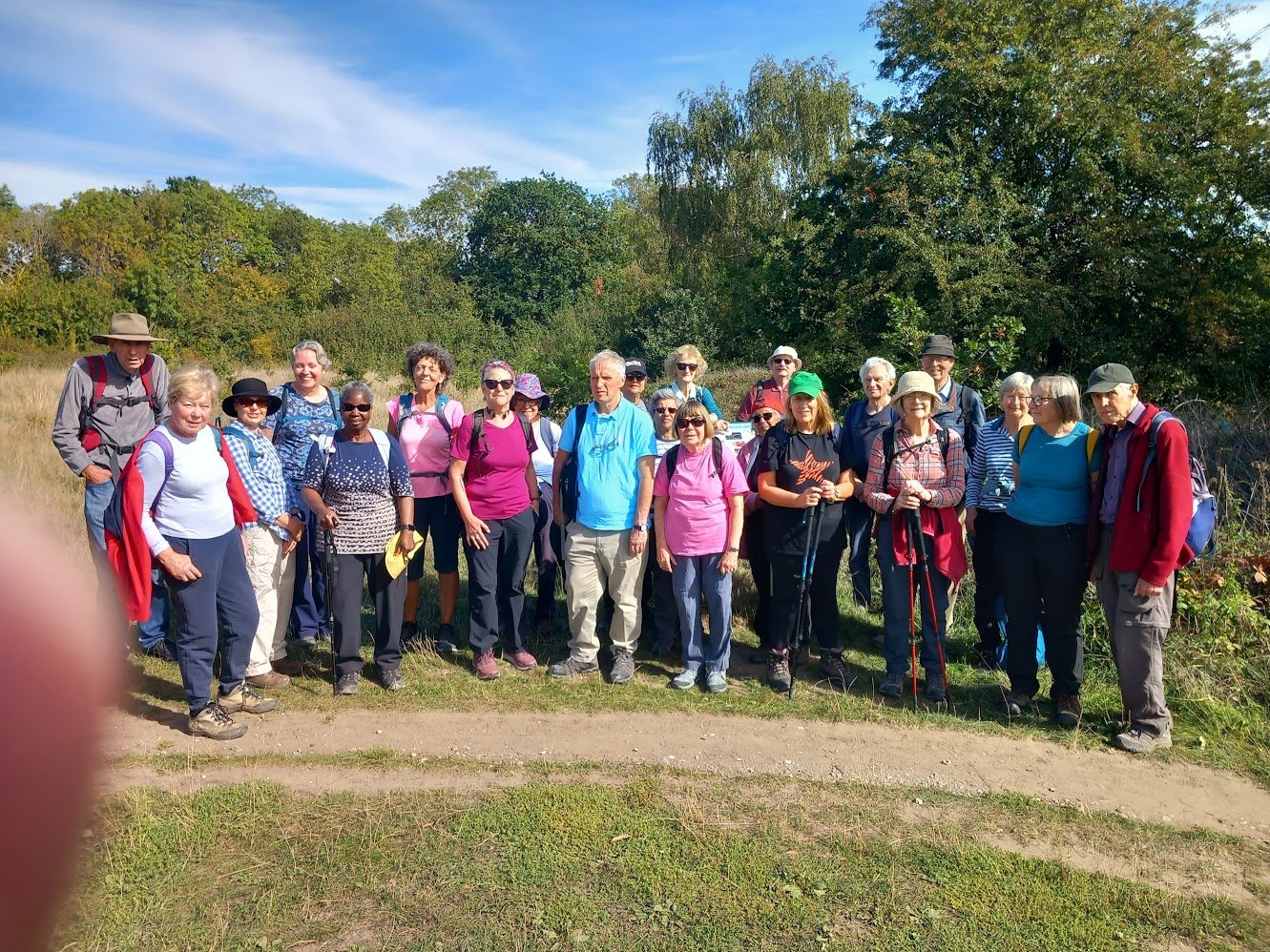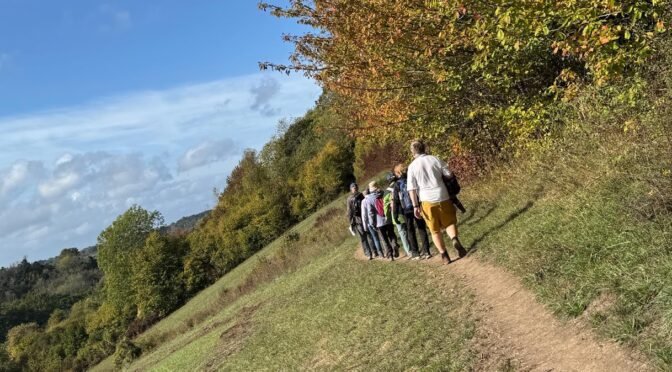
Despite severe warnings about getting lost in the dark if we didn’t keep up a good pace & a very uncertain weather forecast, 15 of us appeared at Dorman’s station for the walk.
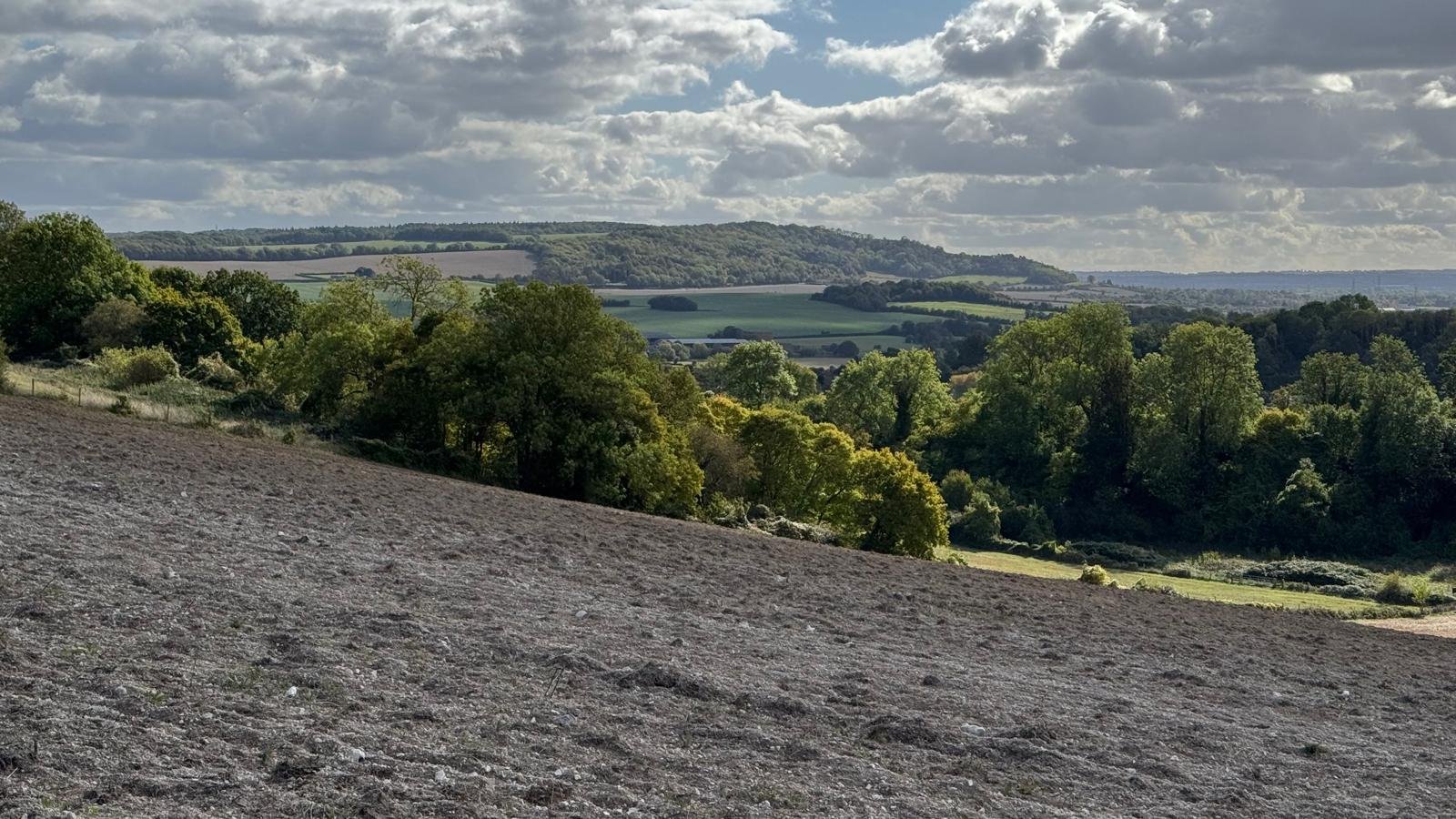
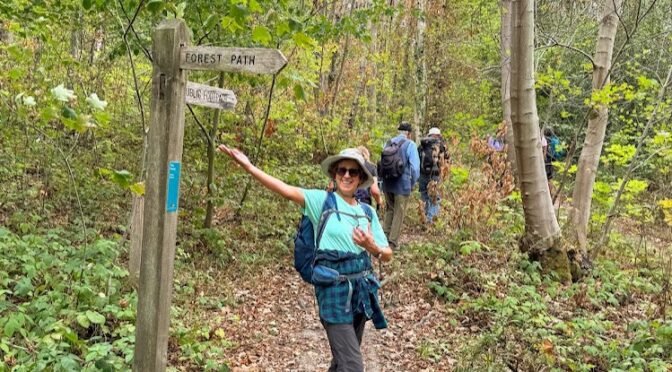
Luckily this walk got us out and into proper countryside very quickly, with little walking in built up areas and we were soon in the lovely Surrey Weald. Weald is an old English word for ‘wood’ or ‘forest’, related to the German ‘Wald’.
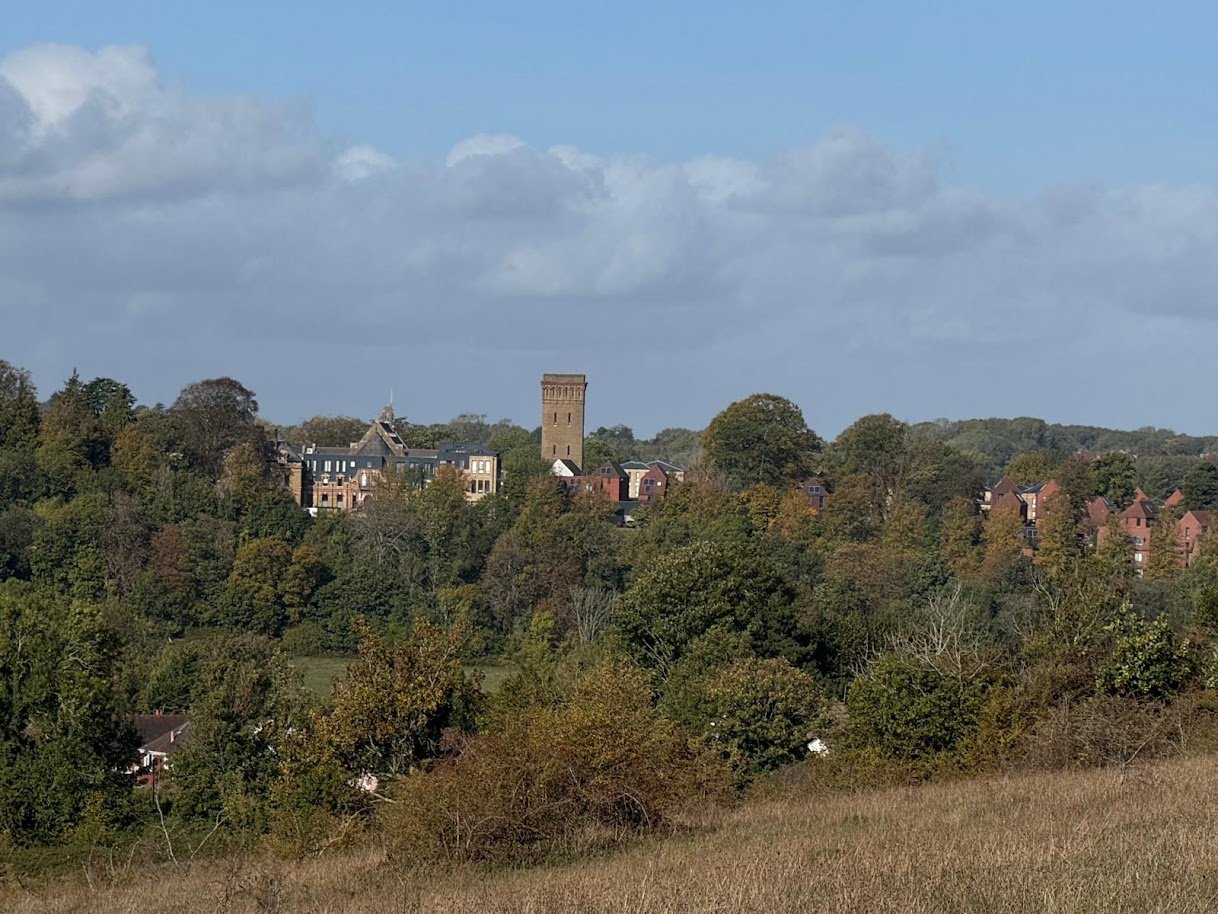
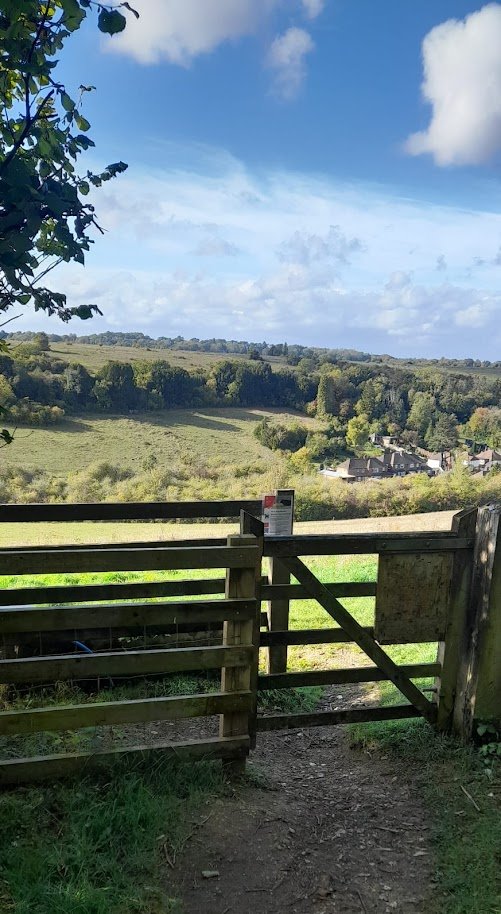
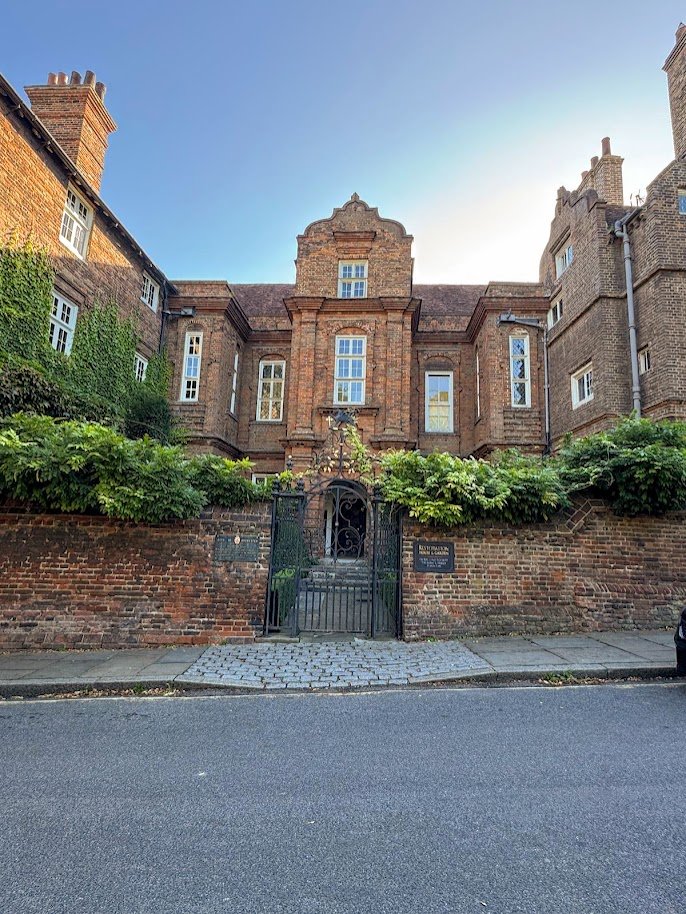
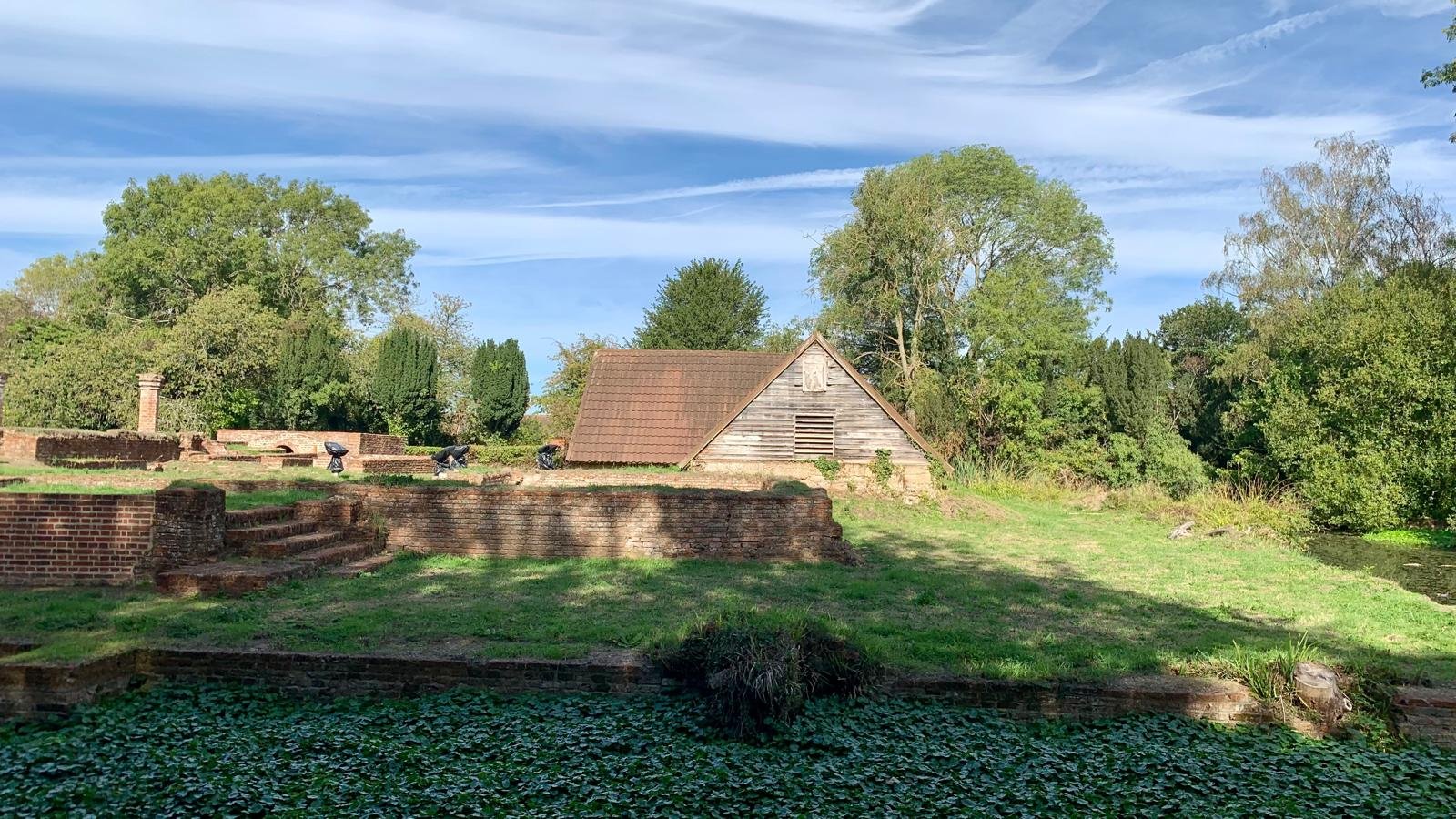
We skirted Greathed Manor which must have been a very grand house but is now a, probably also very grand, Care Home. The walk was undulating with lovely views over the North Downs when we emerged from woodland and could see to the North. Someone had created a Bug Hotel in the woods which seemed, in appropriate imitation, fairly grand itself. We went through woodland and some open grassland and found our way to the little village of Cowden for a lunch stop.
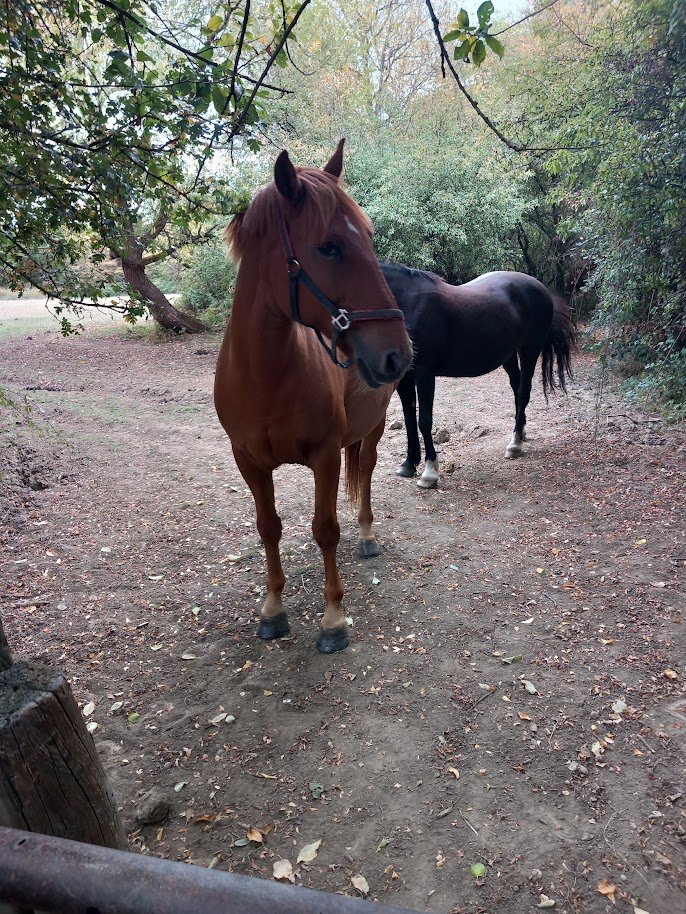
The second half of the walk was a bit more open again with lovely views and, towards the end, a lot of paddocks and horses having their evening hay. The rain kept off except for a little towards the end and we made it to the station before dark so – well done and thank you to all the walkers who came for keeping up the pace.
I was really pleased to see a good turnout of 15 Poly Ramblers at Liverpool Street station where we assembled to catch our train to Manningtree and then Wrabness to start our walk along the Essex Way to Harwich. Amongst them was my young nephew, Matthew, who joined us for the walk and in so doing massively reduced the average age of our group.
On arrival at Wrabness, we spent a bit of time posing and taking photographs in front of its most famous landmark, Grayson Perry’s quirky and exotic House for Essex. The day promised to be dry but cloudy and grey and that’s how it stayed with the occasional glimpse of the sun trying to break through. Fortunately the rain apart from a few spots held off.
As I explained in my opening briefing, the walk was very flat with no stiles. We firstly walked through woods along the banks of the beautiful river Stour estuary which was silent and lacking the bird life that is normally present at the water’s edge probably because it was high tide and the winter migrant birds have yet to arrive. We then struck out inland across farmland passing an old windmill until we came to the village of Ramsey. Here there were two small shops selling fresh fish and the other a master butcher. One Poly Rambler bought a bag of freshly caught whelks which she said tasted superb and would be for her supper.
After navigating our way across a busy roundabout, we walked across more fields until we reached the village of Little Oakley where at the Ye Olde Cherry Tree pub we had our lunch stop. Those with a packed lunch sat in the pub garden and the rest of us ate at the pub. It was a quick and friendly service and the food was excellent. Two ramblers opted for an enormous Kahuna burger which even for my young nephew and his big appetite proved impossible to finish.
After lunch we renewed our walk along the Essex Way and this time the path took us down towards extensive salt marshes from where we could see in the distance the North Sea coast and the busy container port of Felixstowe. We started walking along a levee that took us into the outskirts of Harwich. Our path eventually turned into a tarmac path at a junction with a row of brightly coloured beach huts from where it followed the coast to the end of the peninsula at the old port of Harwich Town. Further on we came to two old Lighthouses built to stop ships going aground as they came into harbour. These were among the earliest lighthouses ever built and superseded an even older one built further inland.
The tarmac path took us along a windy stretch of the coast and it seemed to go on for ever until we came to the Harwich Museum where we crossed a green and turned down into the old historic part of Harwich, Harwich Town. Harwich Town was once a thriving port and is full of characterful buildings with Harwich Historical Society plaques outlining their illustrious past on many of them. Today it feels somewhat sad and neglected and the streets were empty.
Most Poly Ramblers decided to catch the next train and get back to London. A small number of us decided to wait an hour and while away the time at a café on the pier drinking a very welcome cup of tea and eating scones. It was a fitting finish to what had been a fabulous walk with great company.
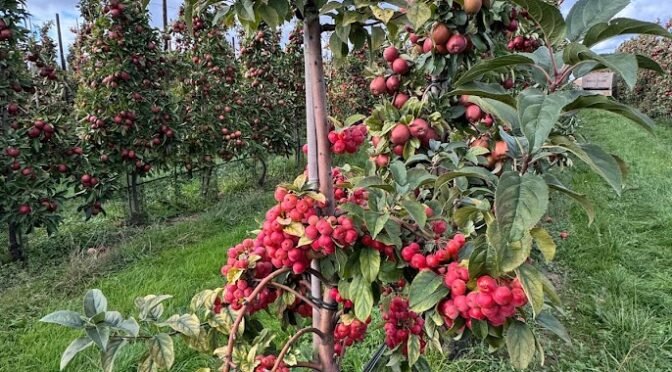
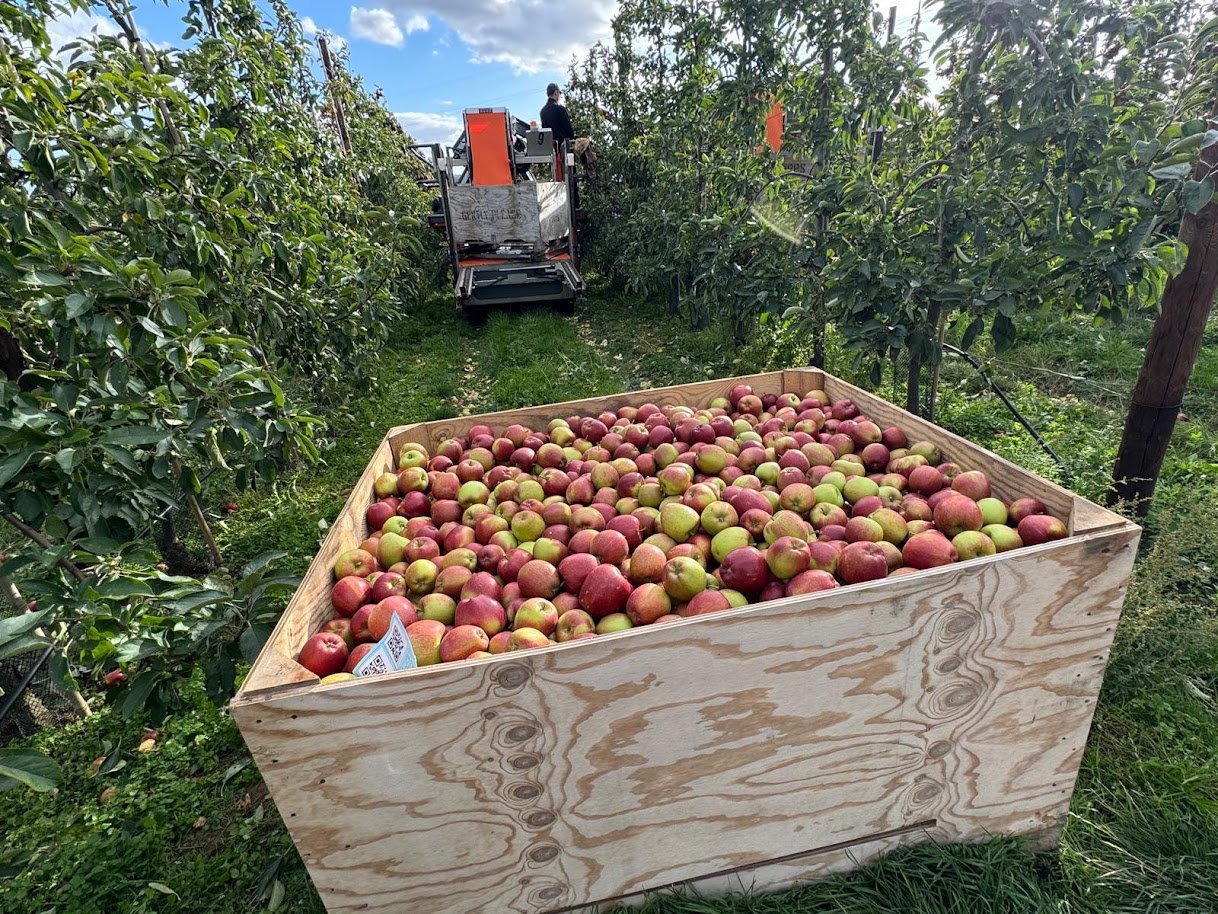
Ten of us set off from Goring on what was a cool and misty morning. The walk was mostly through woods, with some long inclines and a few steep grassy inclines. Along the way we came across two baskets of apples with a ‘help yourself’ note. They looked good and were delicious. We split our lunch into two stops, the first in an open grassy space with a lovely view of the Thames valley. By this time the sun had come out and it was much warmer. Our second stop had an even more magnificent view which we enjoyed whilst indulging in birthday cake produced by Lindy, with candles, from her bag, and Mary was tasked with cutting. As well as Chris’ birthday we were also able to celebrate Ian’s recovering a CFC hat he dropped on the walkover, a couple of weeks previously. Some kind person had placed it on a post. After cake we had a couple of group photos before descending the quite steep grassy slope. On the route we came across quite a few pheasants and a few horses. At the end of the lovely walk, near Pangbourne station, many of us continued Chris’ birthday celebrations with a visit to a lovely local pub (low ceilings!) and sat overlooking the river. A good day out indeed!
On the 200th Birthday of the first British railway train service ever, at Bedford station I met 9 polyramblers who arrived on the fast train from St Pancras. I had already met another previously on the slower train from Flitwick into Bedford. We made our way onto platform 1A, where the two coach Bletchley DMU soon pulled in. All 11 of us boarded this little train setting off for the Kempston Hardwick halt, 2 stops away.
Kempston Hardwick has the reputation of being the least used station in Bedfordshire. It is easy to see why as there is very little surrounding it, other than a level crossing, a minor road and open fields. There was a small adjacent car park where I held our safety briefing. Much of the farmland surrounding this halt has been purchased by Universal Studios in order to construct a theme park for pleasure rides (possibly similar to Alton Towers?) and this received Government backing last April.
It was a slightly overcast morning with sunny spells. The initial part of the walk went eastwards away from the halt, along Manor Road where we had to keep in single file, there being no footway. Soon the side verges widened, where we reached a gateway opposite. I explained to the party that behind these gates is the Concrete Slab, being a former brickwork site about an acre in size. It is likely that Universal will use this space as their Park offices.
Continuing further along the road, passing a row of houses some now derelict, we then turned right, into the car park of a conference venue, onto a path, doubling back westwards through some woodland where, fenced to our left, the humungous car park of British Car Auctions(BCA) appeared. Then ahead the path took us between two metal wedges onto an open field. This had been recently ploughed, and indeed a tractor could be seen moving in the distance doing the ploughing! We carried onwards towards, and in between, two more metal wedges at the opposite side of this field, then entered into another ploughed field, and crossed the Marston Vale railway into a third field.
These fields are now part of the Universal site. I explained that this third field would be developed into their transport hub, by bringing in a link spur from the A421 dual carriageway visible beyond the distant end of the field. Parking here will be provided for visitors, a new station to be built on the Marston Vale line, and possibly a hotel.
We then retraced our steps back over the railway to the second field, then proceeded along a southward path towards Broadmead Farm. This path was not easily visible, but thanks to the OS Maps App, navigating us across the two metal wedges at the far field end proved to be no problem. From this farm we continued south along a road to the edge of Stewartby, and going further down the road we passed some ex brickworks sites. Then the road curved round to the right taking us across to Stewartby station and level crossing. At this point we took a left path into the Forest of Marston Vale.
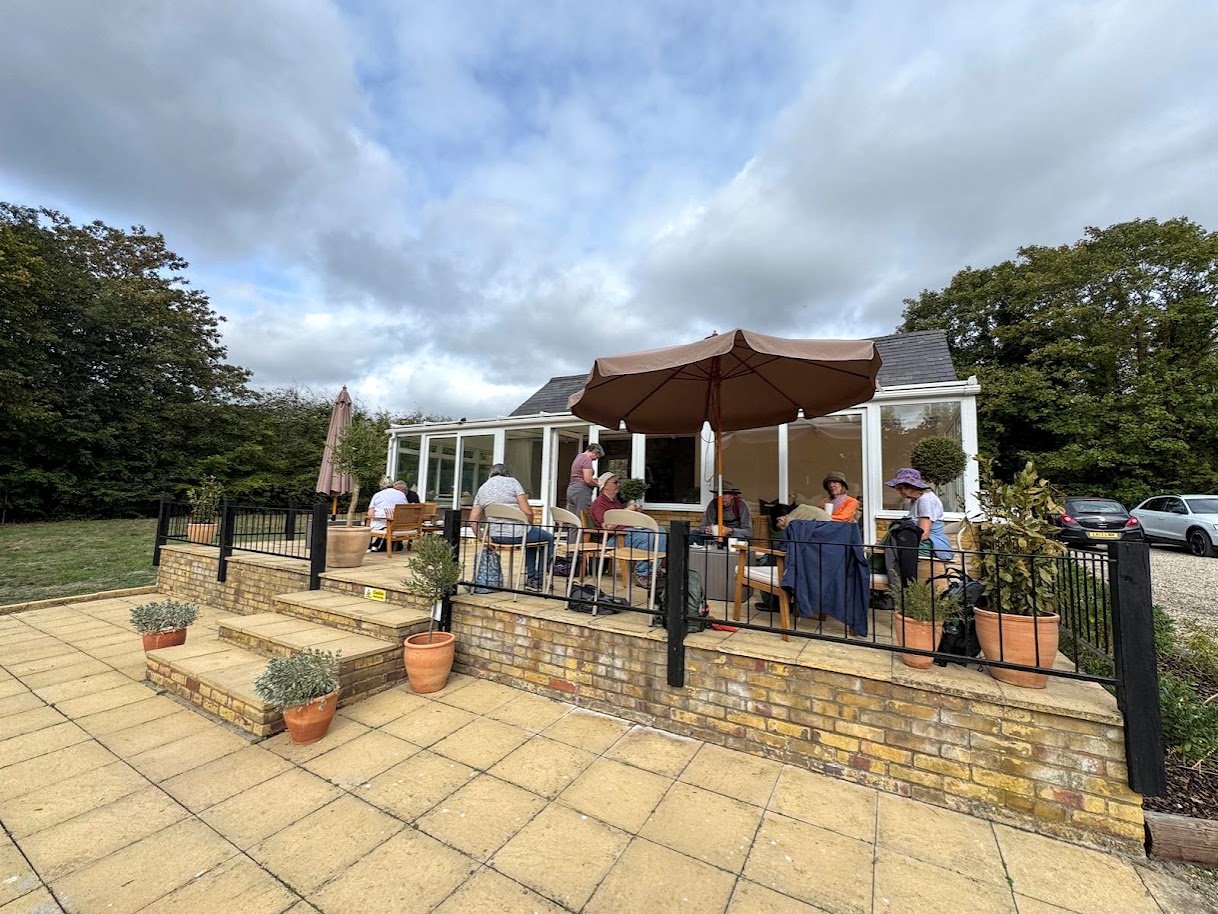
The Forest of Marston Vale is a community forest set in 225 hectares, previously a large clay extraction site for brickmaking, now an area with several lakes yielding a wildlife habitat. After a mile or so of woodland tracks we reached the forest’s Visitor Centre. Some polyramblers ate their sandwiches in the garden, the rest of us ate in the centre’s cafeteria.
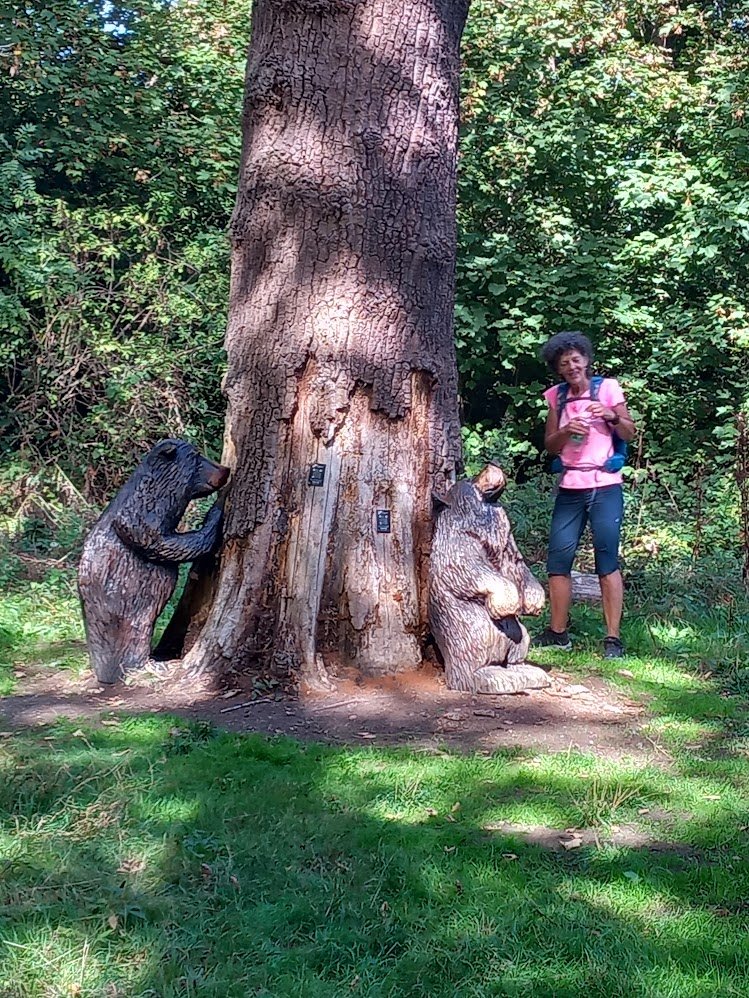
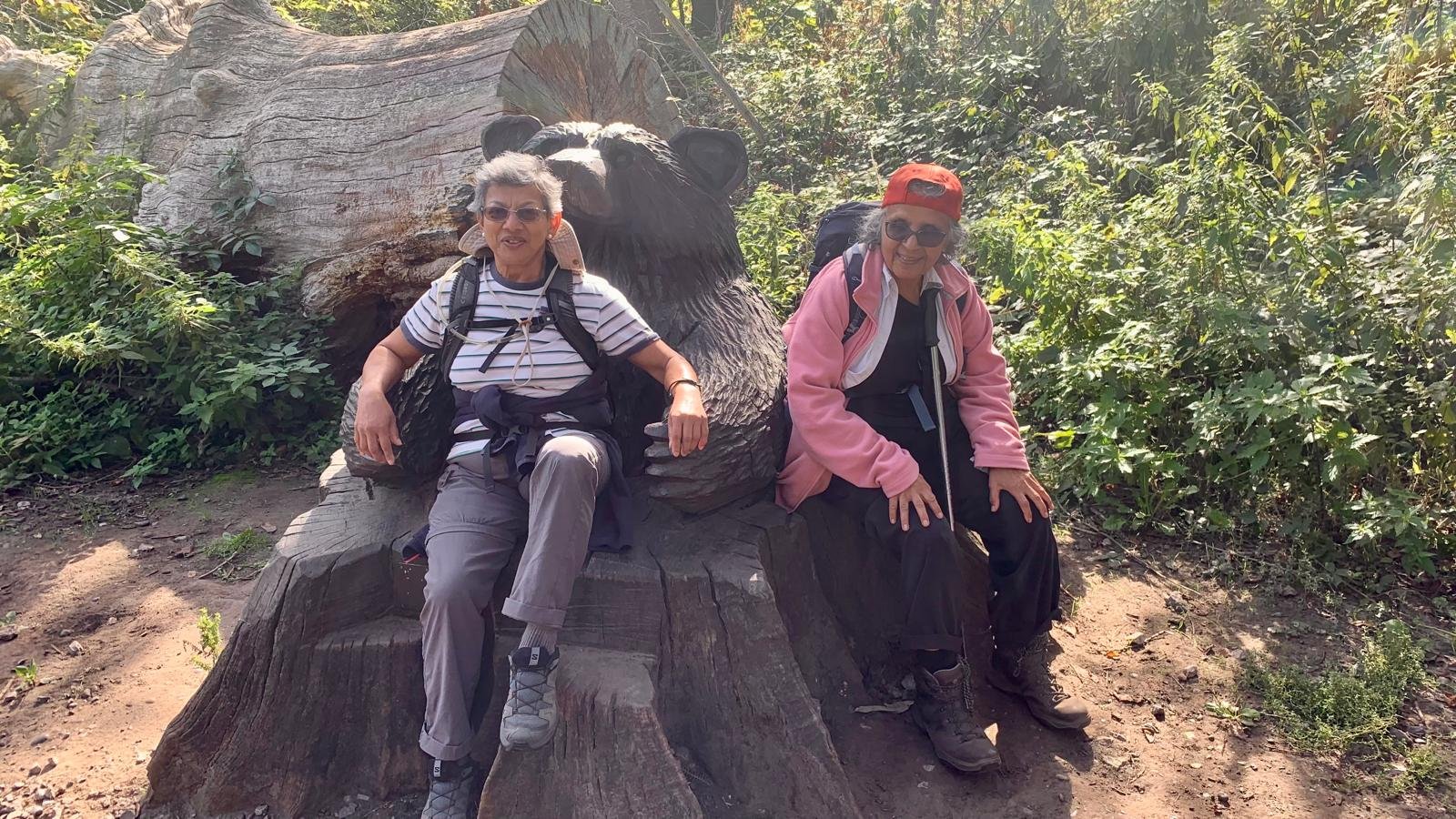
By now we were well over halfway through the ramble. After lunch we continued around the edge of the forest along shady tracks with occasional seats carved of of logs with various patterned shapes. A mile and a bit later we reached Millbrook station in good time for the Bedford train. Attached to the platform fences were some information boards about Captain Sir Tom Moore, a local hero during COVID times, including some lovely poetry. We all boarded the train to Bedford. At Bedford station I directed most of the party to the next fast London train and we said our goodbyes as they boarded.
It was a cloudy, cool, early autumn day when we assembled as a modest group for the start of our exploratory walk from West Drayton station. Shortly after leaving the routines of West Drayton town we entered a park where we progressed along a path under an impressive line of Horse Chestnut trees which were busy shedding their seasonal scatterings of conkers. Continuing on and just 30 mins from the start we reached the mighty M4 motorway and crossed a footbridge to reach the edge of Harmondsworth Moor.
In our enthusiasm to push forward we then turned right into the foliage to skirt a vast hidden lake (see photo) but alas three straggling walkers missed the turn and continued straight ahead towards Harmondsworth church and village. After a worried phone call to the detached group it was agreed that they would press on by their own navigation to our lunch stop at the White Horse pub. No worries.
The main group then headed into the body of the moor through woodland via a maze of well made gravel footpaths and across two wooden footbridges spanning picturesque waterways. Soon we reached the high point atop a gentle rise to survey the surroundings. Behind we could hear but couldn’t see beyond the thicket of bordering trees the nearby thunderous M25 whilst ahead lay three and a half thousand acres of carefully manicured tranquillity.
Harmondsworth Moor in its present form was established around 2000 and its transformation was jointly funded by Hillingdon Council and British Airways. It’s now a very remarkable and largely unknown gem but was formerly an uninviting derelict site of gravel pits and toxic landfill. After a massive cleanup operation it was landscaped with grassy meadows, the planting of 70,000 trees, the dredging out of two sizable lakes and ponds and the masterful diversion of three rivers.
This sprawling parkland is all effortlessly accessible by a complex network of fine mud free pathways. It’s become a worthy haven for wildlife and a you name it array of birdlife. Also a noteworthy feature at the top of our prominent rise known as ‘The Keyhole’ was a collection of carefully piled and engraved massive square stones which were transported here for storage from the demolition of the old Waterloo Bridge in 1935.
It was here that the leader informed the stunned group that this was indeed the site of Heathrow’s proposed controversial third runway. Consequentially a large part of the moor plus several hundred homes from the nearby Harmondsworth village would all eventually be carpeted under concrete and tarmac. Moving on the group descended and heading further south followed a sunken tree curtained path along the banks of the serene River Colne where we presently reached the edge of one of Heathrow’s hyper active runways. We watched awestruck as a relentless procession of giant aircraft from around the world flew noisily by, scarily almost within touching distance. Huge lumps of lumbering screaming streamlined metal just seconds from touchdown.
Then it was a short stroll to our pub stop to unite heartily with our detached ramblers and enjoy a pleasurable lunch. On leaving the pub we headed in drizzle onto Harmondsworth village just an easy promenade away. Adjacent to the Five Bells community centered village pub stands the Great Barn which alas is only opened rarely for the public to admire.
The good news is that this historically important barn should fortunately escape destruction or resiting as it is just outside the blighted zone. Built around the 14th century this vast barn still survives proudly and sturdily thanks largely to its huge thick supporting oak pillars. The local English Heritage volunteers were keen to impart their prodigious knowledge to our group of this awesome structure. Well worth a visit.
On departing as the weather got rainier and more miserable we decided as a group that rather than repair to the charms of the Five Bells that a sensible option was to take the bus back to West Drayton station and head homewards to dry.
Harmondsworth Moor however is still there although its time and its full splendour is no doubt limited. Enjoy it while we can.
Les
Photos by Ida, Joyanna and Les. Incidentally the sunnier photos were taken on a previous visit.