Click here to view our autumn /winter programme.

Click here to view our autumn /winter programme.
I was really pleased to see a good turnout of 15 Poly Ramblers at Liverpool Street station where we assembled to catch our train to Manningtree and then Wrabness to start our walk along the Essex Way to Harwich. Amongst them was my young nephew, Matthew, who joined us for the walk and in so doing massively reduced the average age of our group.
On arrival at Wrabness, we spent a bit of time posing and taking photographs in front of its most famous landmark, Grayson Perry’s quirky and exotic House for Essex. The day promised to be dry but cloudy and grey and that’s how it stayed with the occasional glimpse of the sun trying to break through. Fortunately the rain apart from a few spots held off.
As I explained in my opening briefing, the walk was very flat with no stiles. We firstly walked through woods along the banks of the beautiful river Stour estuary which was silent and lacking the bird life that is normally present at the water’s edge probably because it was high tide and the winter migrant birds have yet to arrive. We then struck out inland across farmland passing an old windmill until we came to the village of Ramsey. Here there were two small shops selling fresh fish and the other a master butcher. One Poly Rambler bought a bag of freshly caught whelks which she said tasted superb and would be for her supper.
After navigating our way across a busy roundabout, we walked across more fields until we reached the village of Little Oakley where at the Ye Olde Cherry Tree pub we had our lunch stop. Those with a packed lunch sat in the pub garden and the rest of us ate at the pub. It was a quick and friendly service and the food was excellent. Two ramblers opted for an enormous Kahuna burger which even for my young nephew and his big appetite proved impossible to finish.
After lunch we renewed our walk along the Essex Way and this time the path took us down towards extensive salt marshes from where we could see in the distance the North Sea coast and the busy container port of Felixstowe. We started walking along a levee that took us into the outskirts of Harwich. Our path eventually turned into a tarmac path at a junction with a row of brightly coloured beach huts from where it followed the coast to the end of the peninsula at the old port of Harwich Town. Further on we came to two old Lighthouses built to stop ships going aground as they came into harbour. These were among the earliest lighthouses ever built and superseded an even older one built further inland.
The tarmac path took us along a windy stretch of the coast and it seemed to go on for ever until we came to the Harwich Museum where we crossed a green and turned down into the old historic part of Harwich, Harwich Town. Harwich Town was once a thriving port and is full of characterful buildings with Harwich Historical Society plaques outlining their illustrious past on many of them. Today it feels somewhat sad and neglected and the streets were empty.
Most Poly Ramblers decided to catch the next train and get back to London. A small number of us decided to wait an hour and while away the time at a café on the pier drinking a very welcome cup of tea and eating scones. It was a fitting finish to what had been a fabulous walk with great company.
Mary King. Photos by Mary, Jackie M, Chris, Susan


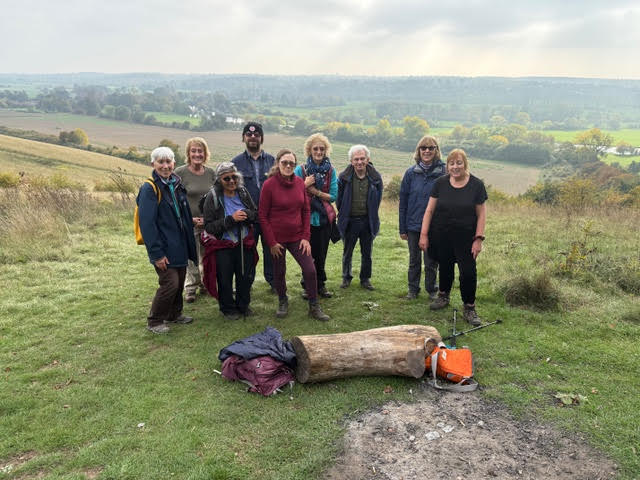
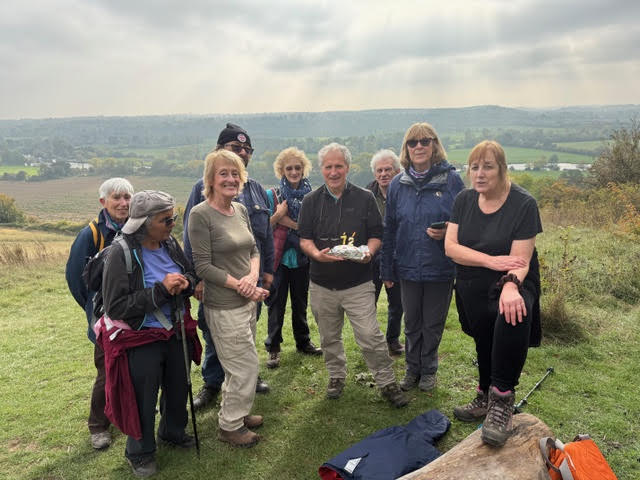
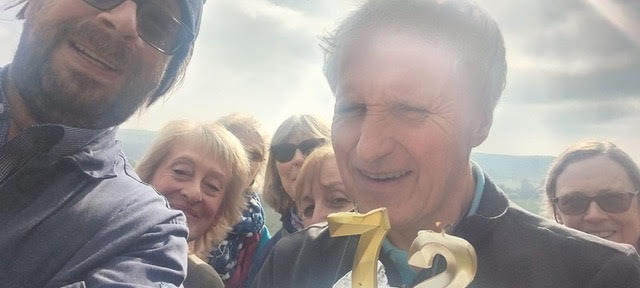
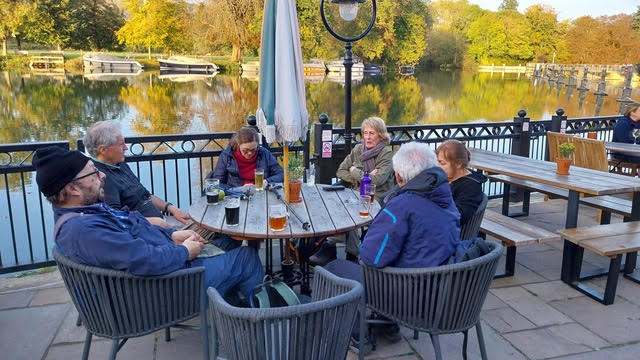
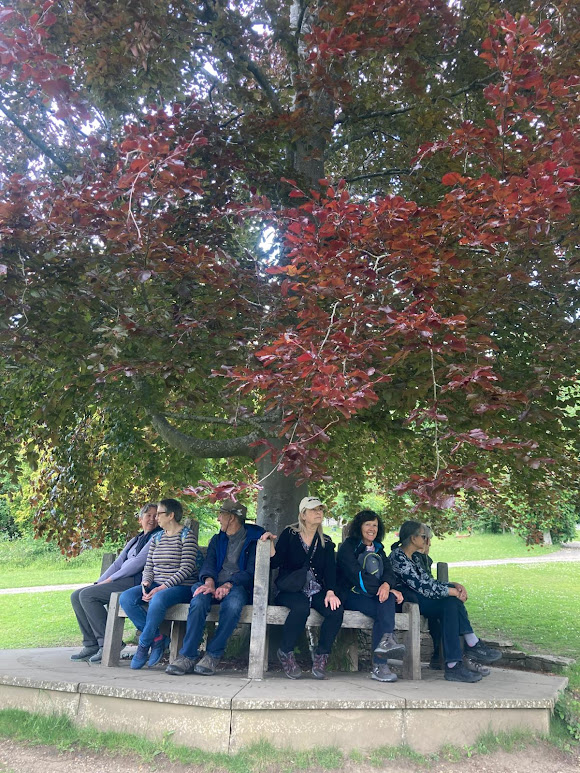
Nearly 30 Poly Ramblers gathered at Great Missenden station on a Sunday in early June for a short walk to whet our appetites for a traditional afternoon tea at Missenden Abbey, an event organised to mark the Club’s 140th anniversary. Although it was June the weather forecast was uncertain with rain threatened so everyone turned up in sensible walking gear. Plans by some to wear tea dresses were abandoned.
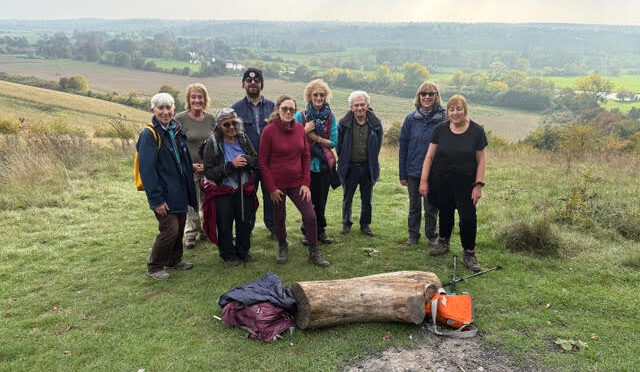
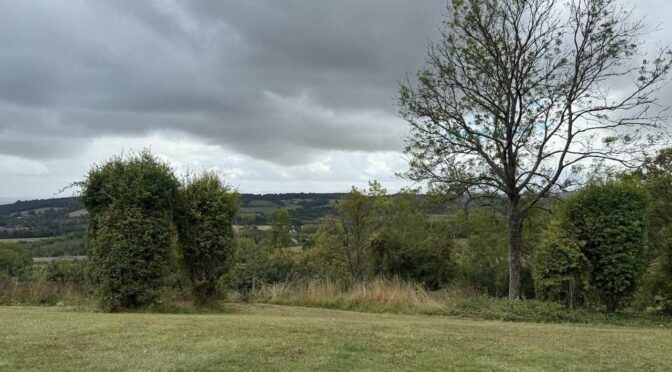
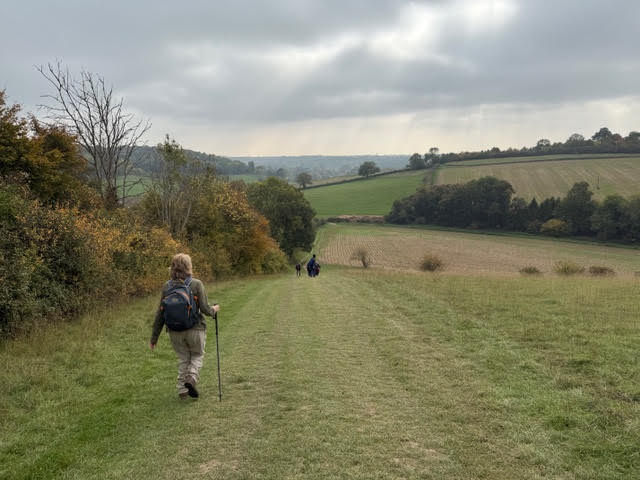
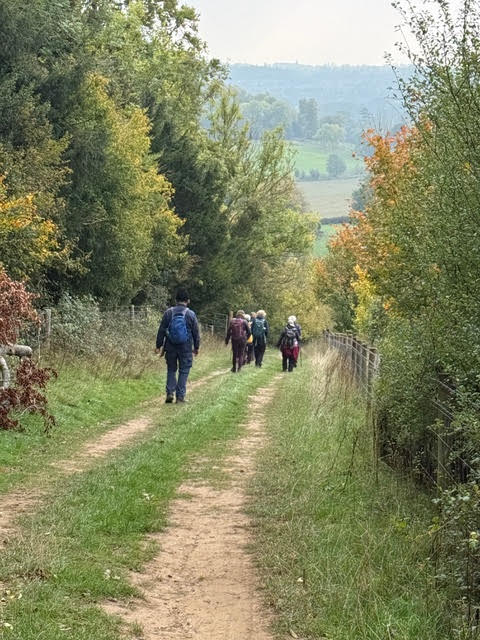
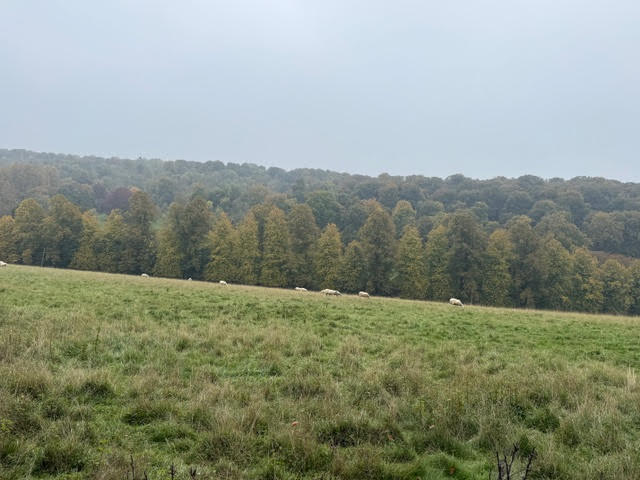
Yvonne Delahaye led us on a lovely circuit of the town with some gentle climbs rewarded by splendid views over the Chiltern Hills. After descending through woods a small group led by Danny took a shortcut back into the town (to go to the pub?!) while the rest of us climbed through woods and descended again to reach St Peter’s and St Paul’s church where we paused to view Roald Dahl’s grave before continuing to the Abbey.
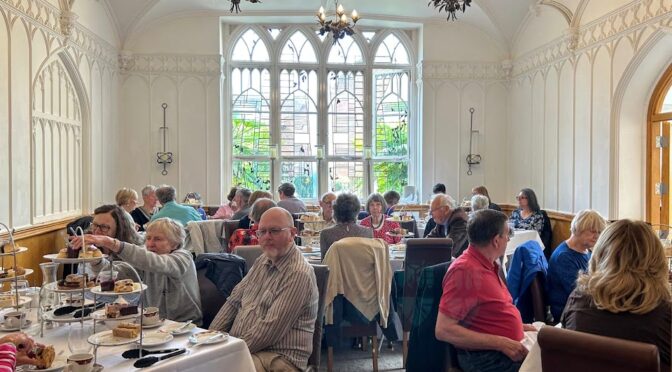
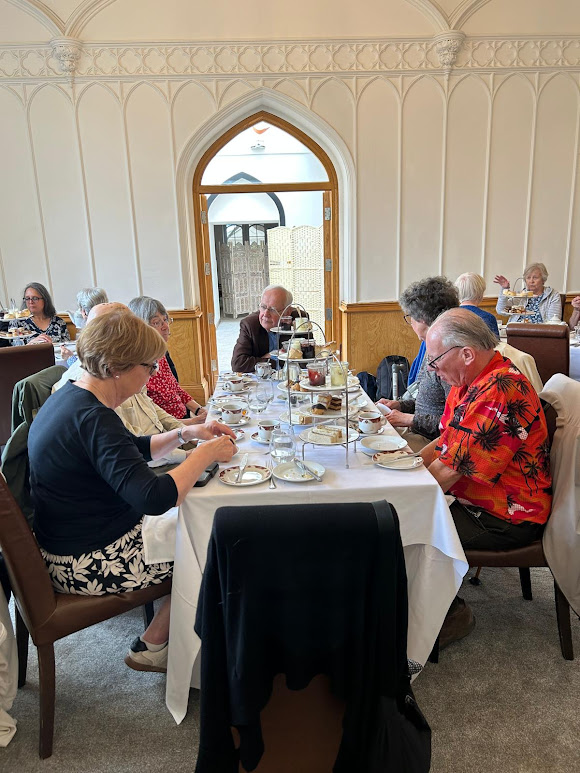
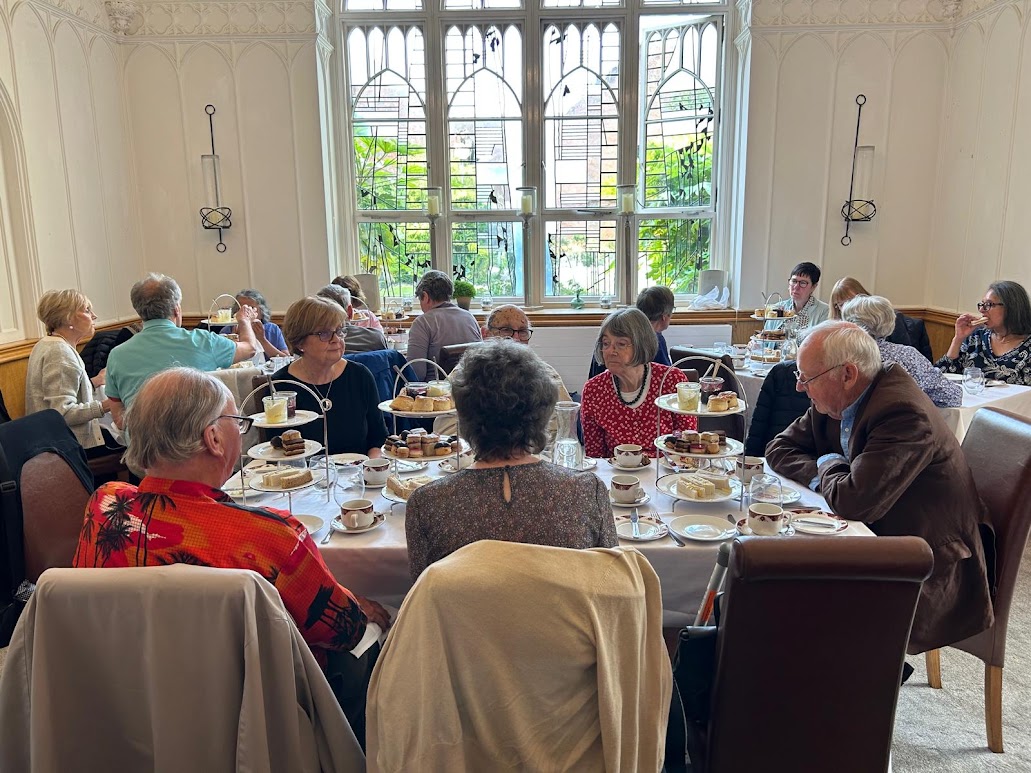
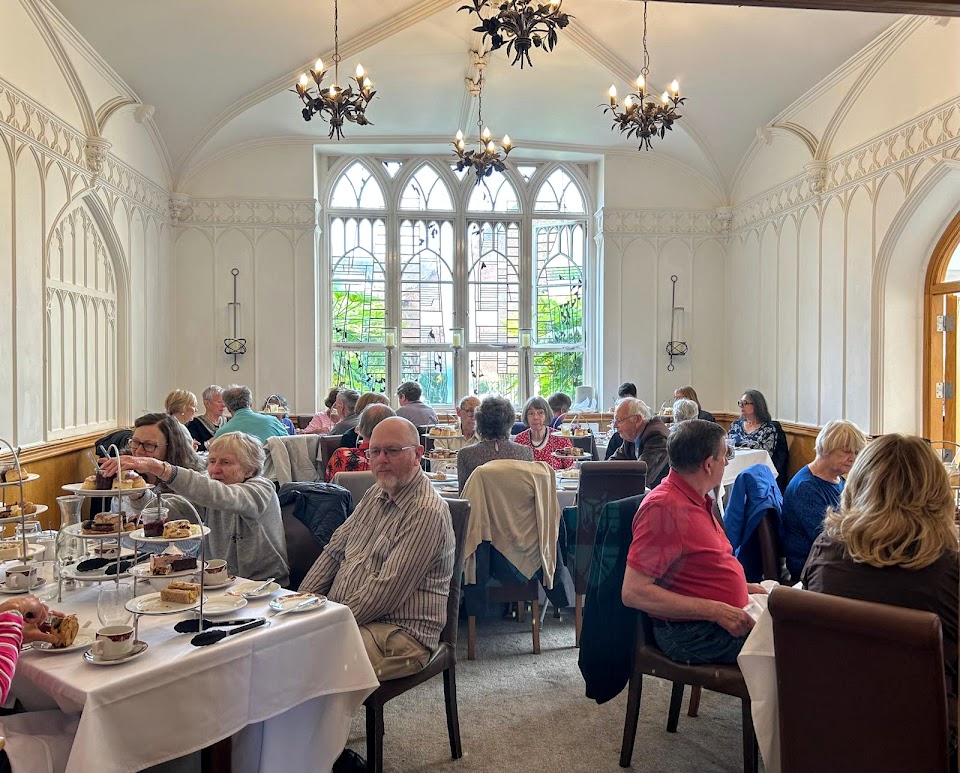
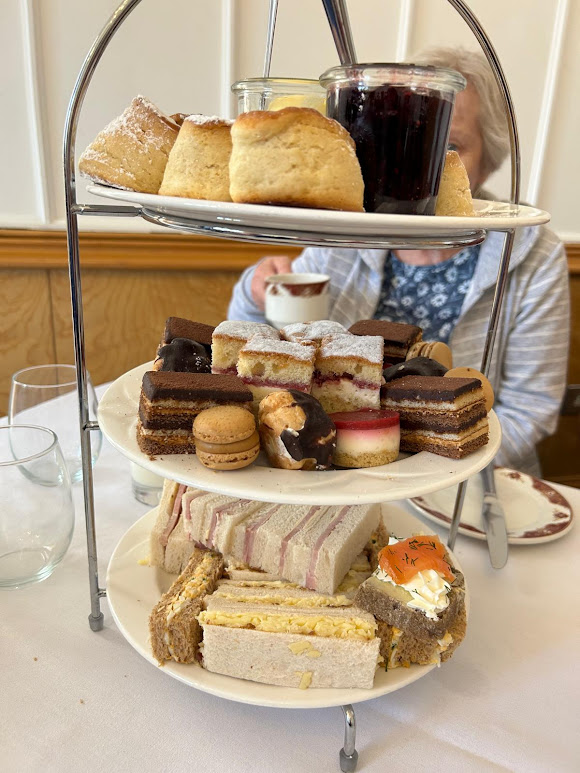
Missenden Abbey is a 12th century former medieval abbey, now used as a conference and events venue. It was the first time I had been there since Stuart and I got married there 24 years ago. Thirty four Poly Ramblers gathered for tea in the very pleasant Fleetwood room. I had requested a traditional afternoon tea served at the table so I was a bit disconcerted to find guests queuing for self service tea and coffee! Once that (and some confusion about the vegetarian sandwiches) was resolved, we sat down to a plentiful array of delicious sandwiches, cakes and scones with cream and jam.
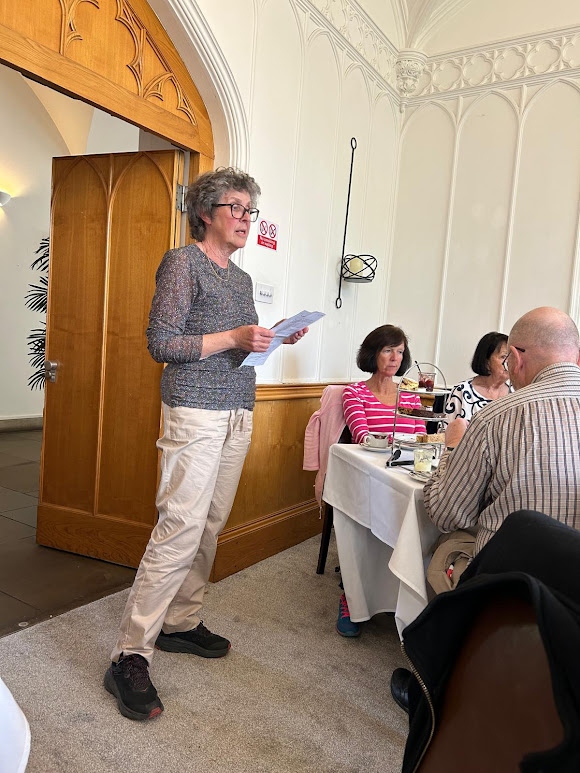
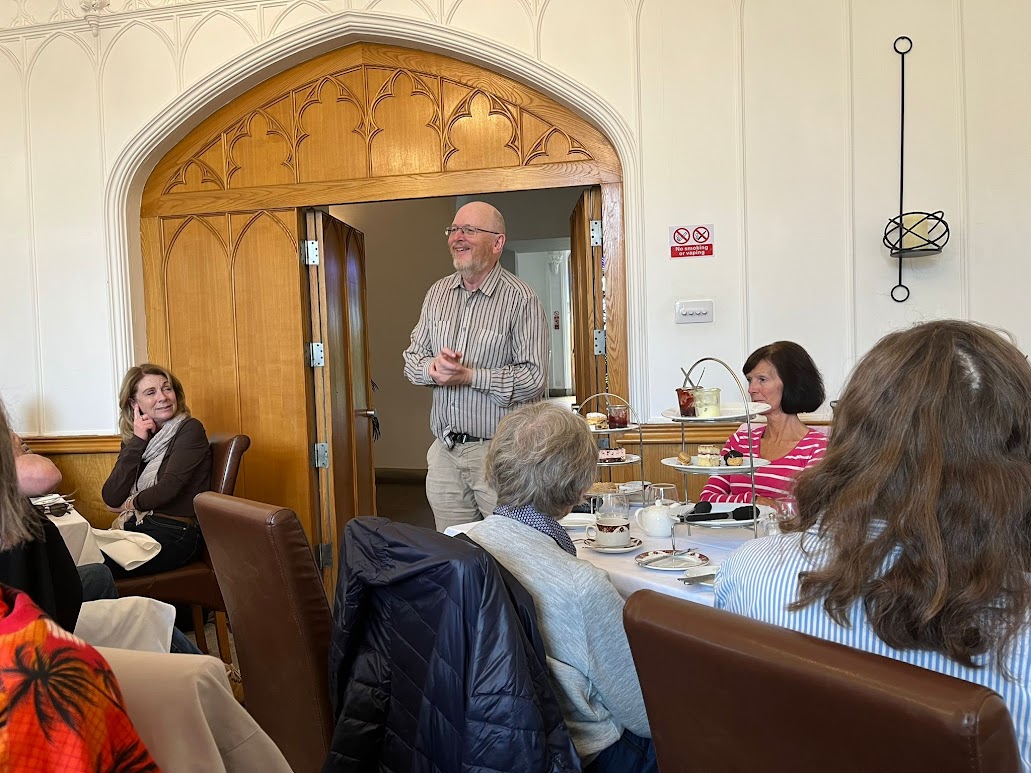
Jennifer, our Chair, spoke about the history of the Club and recounted some memories of committee members of their time in the Club. These included trips to Italy and France, walking across Morecambe Bay, and, closer to home, one member’s first walk with the Club in Epping Forest. More prosaically another member remembered being mildly hypothermic on the way home from a particularly wet walk in the Chilterns! Geoffrey, who has been a member for over 40 years, recounted a memory from each of his six decades in the Club. We headed home pleasantly full with our doggy bags full of scones and cakes after an enjoyable afternoon. We were sorry to hear in the news ten days later that Missenden Abbey was being sold and was due to close in November.
Gillian. Photos by Nita, Vanessa, Suzanne, Lan and others
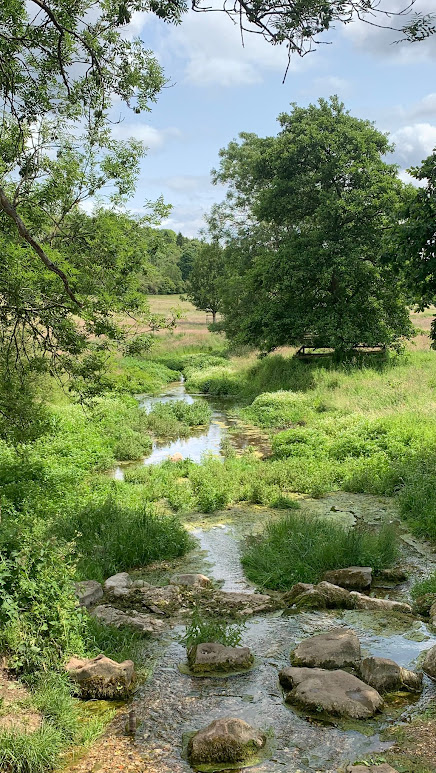
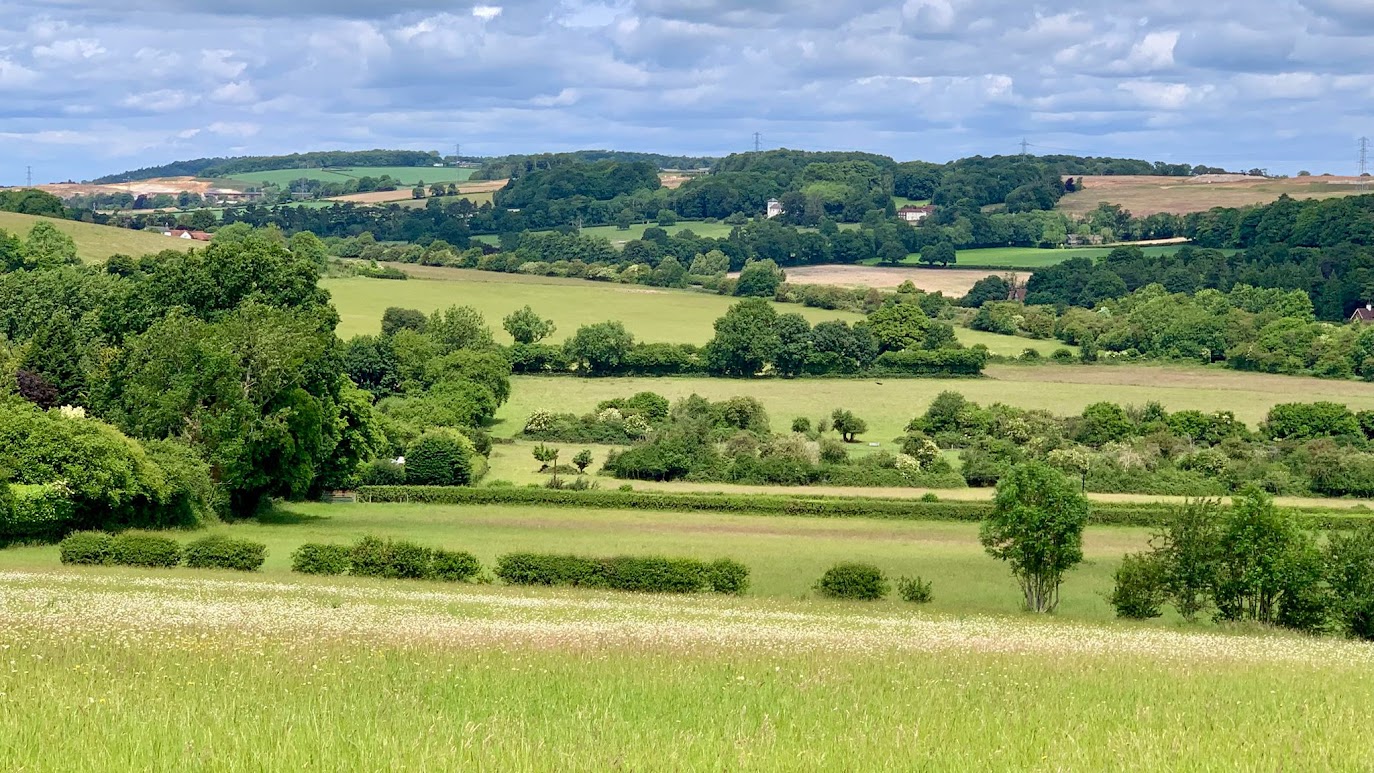
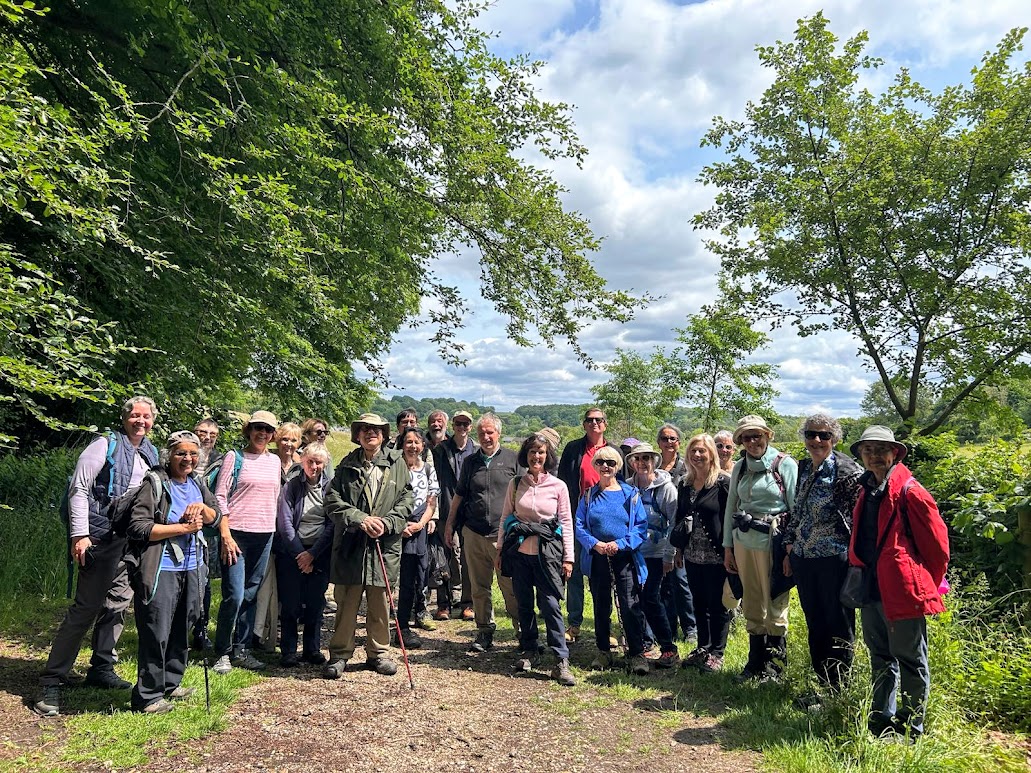
On the 200th Birthday of the first British railway train service ever, at Bedford station I met 9 polyramblers who arrived on the fast train from St Pancras. I had already met another previously on the slower train from Flitwick into Bedford. We made our way onto platform 1A, where the two coach Bletchley DMU soon pulled in. All 11 of us boarded this little train setting off for the Kempston Hardwick halt, 2 stops away.
Kempston Hardwick has the reputation of being the least used station in Bedfordshire. It is easy to see why as there is very little surrounding it, other than a level crossing, a minor road and open fields. There was a small adjacent car park where I held our safety briefing. Much of the farmland surrounding this halt has been purchased by Universal Studios in order to construct a theme park for pleasure rides (possibly similar to Alton Towers?) and this received Government backing last April.
It was a slightly overcast morning with sunny spells. The initial part of the walk went eastwards away from the halt, along Manor Road where we had to keep in single file, there being no footway. Soon the side verges widened, where we reached a gateway opposite. I explained to the party that behind these gates is the Concrete Slab, being a former brickwork site about an acre in size. It is likely that Universal will use this space as their Park offices.
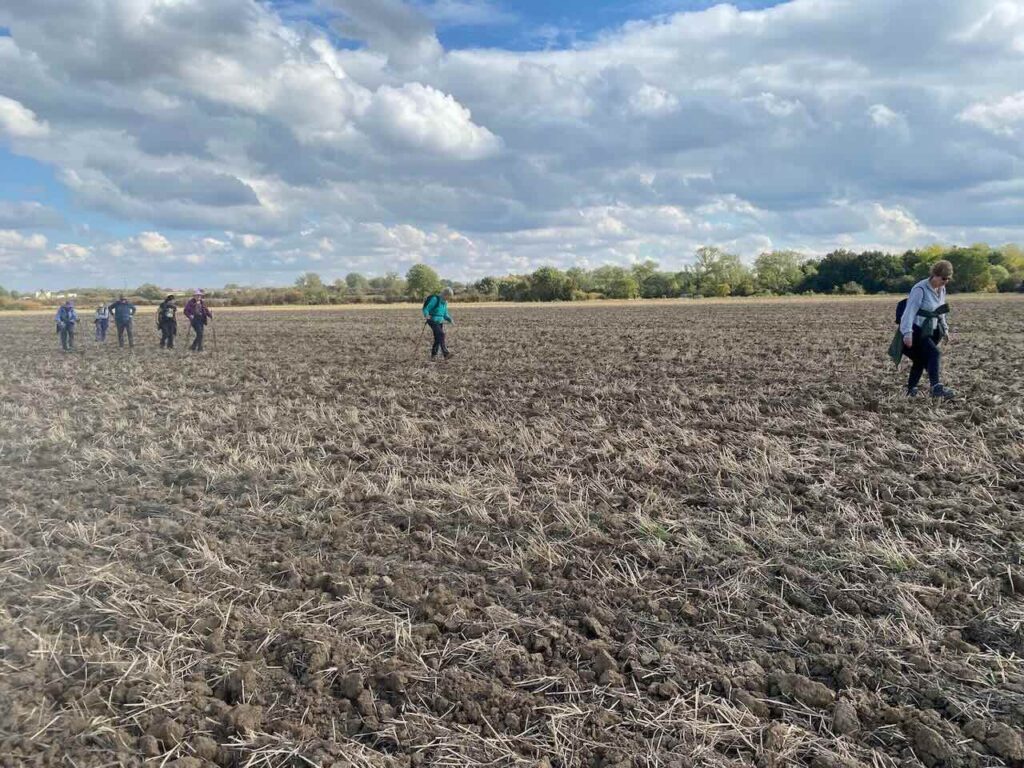
Continuing further along the road, passing a row of houses some now derelict, we then turned right, into the car park of a conference venue, onto a path, doubling back westwards through some woodland where, fenced to our left, the humungous car park of British Car Auctions(BCA) appeared. Then ahead the path took us between two metal wedges onto an open field. This had been recently ploughed, and indeed a tractor could be seen moving in the distance doing the ploughing! We carried onwards towards, and in between, two more metal wedges at the opposite side of this field, then entered into another ploughed field, and crossed the Marston Vale railway into a third field.
These fields are now part of the Universal site. I explained that this third field would be developed into their transport hub, by bringing in a link spur from the A421 dual carriageway visible beyond the distant end of the field. Parking here will be provided for visitors, a new station to be built on the Marston Vale line, and possibly a hotel.
We then retraced our steps back over the railway to the second field, then proceeded along a southward path towards Broadmead Farm. This path was not easily visible, but thanks to the OS Maps App, navigating us across the two metal wedges at the far field end proved to be no problem. From this farm we continued south along a road to the edge of Stewartby, and going further down the road we passed some ex brickworks sites. Then the road curved round to the right taking us across to Stewartby station and level crossing. At this point we took a left path into the Forest of Marston Vale.
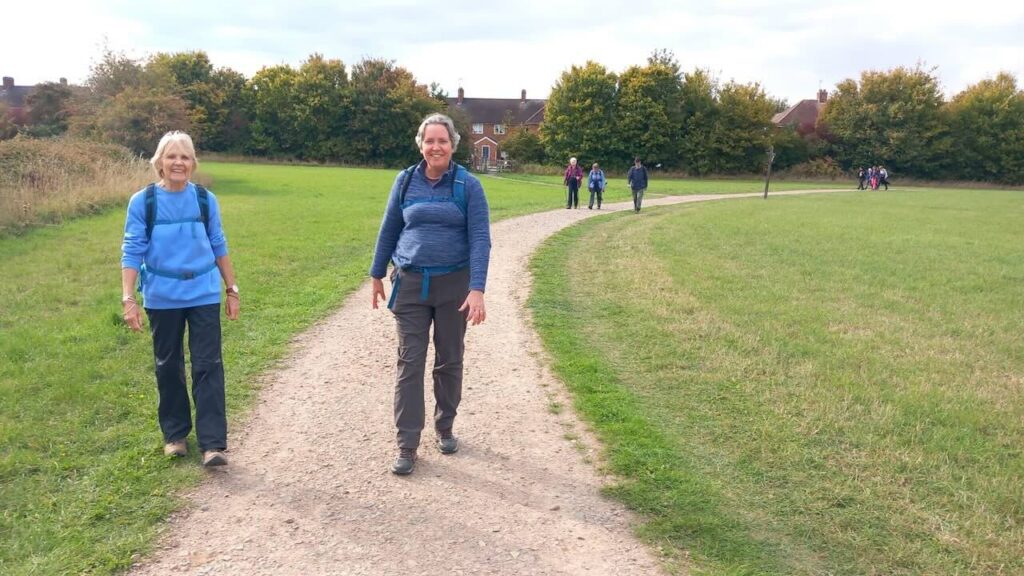
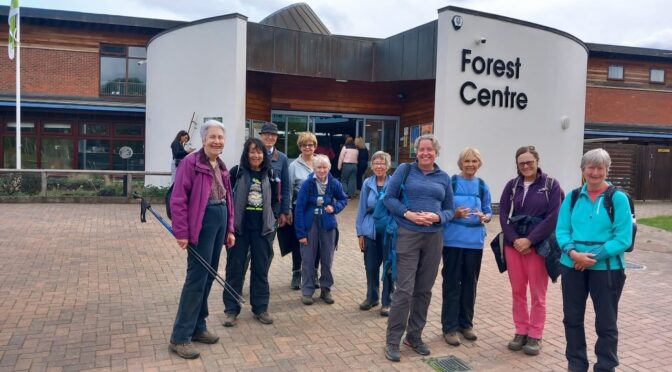
The Forest of Marston Vale is a community forest set in 225 hectares, previously a large clay extraction site for brickmaking, now an area with several lakes yielding a wildlife habitat. After a mile or so of woodland tracks we reached the forest’s Visitor Centre. Some polyramblers ate their sandwiches in the garden, the rest of us ate in the centre’s cafeteria.
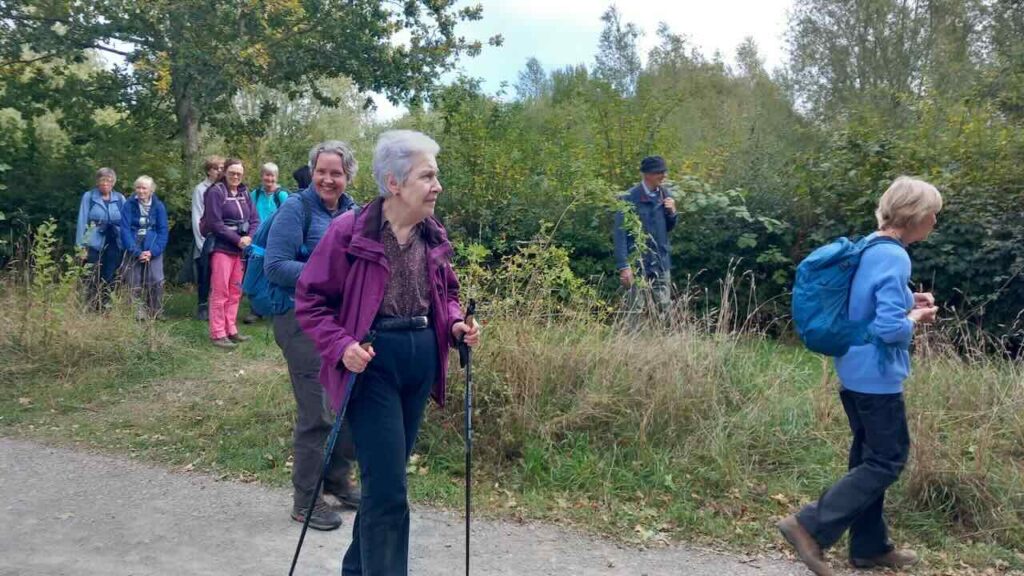
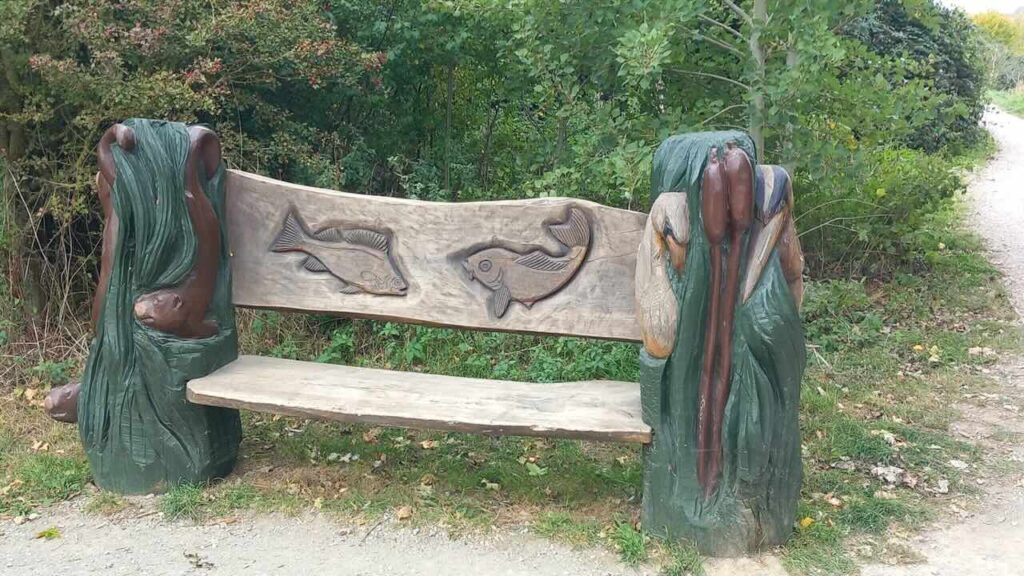
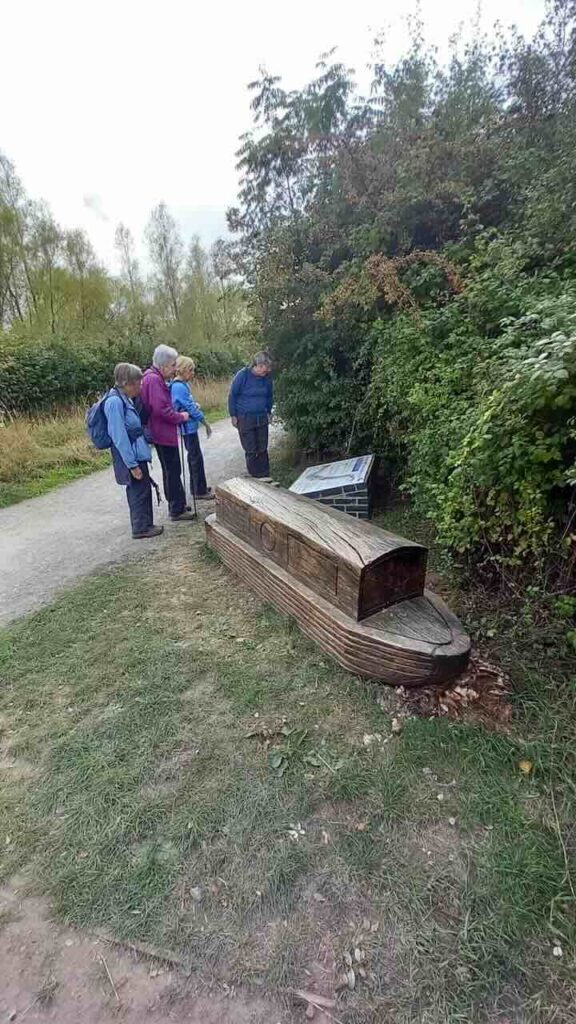
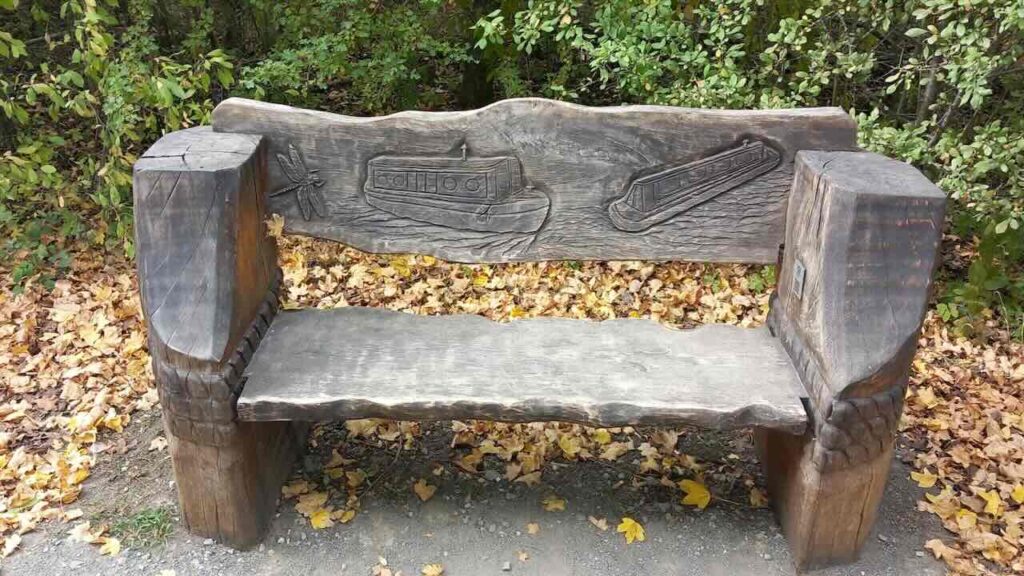
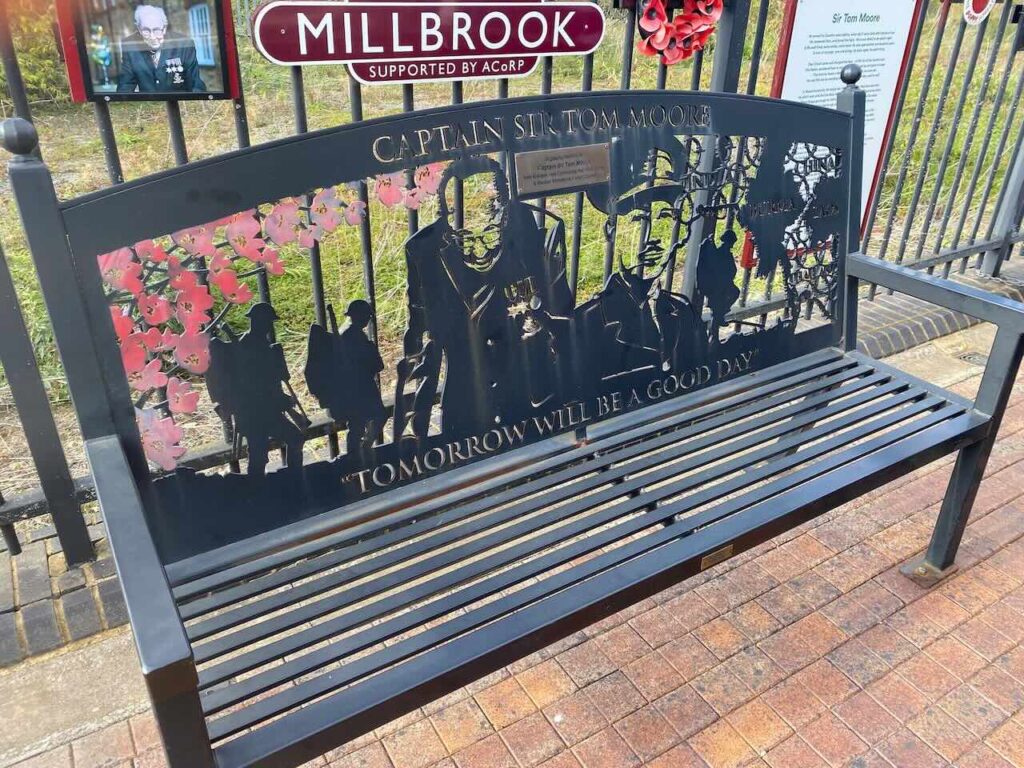
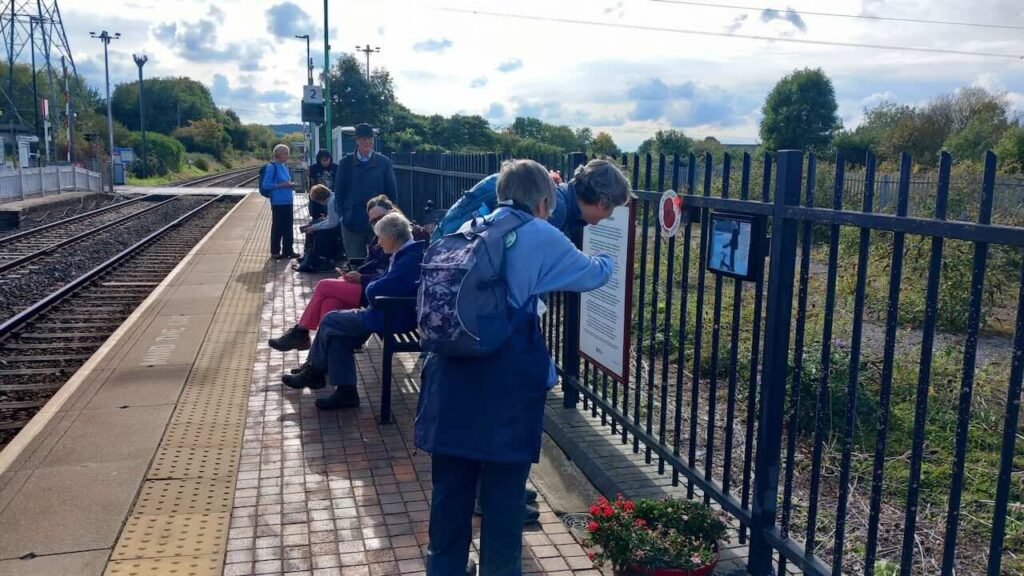
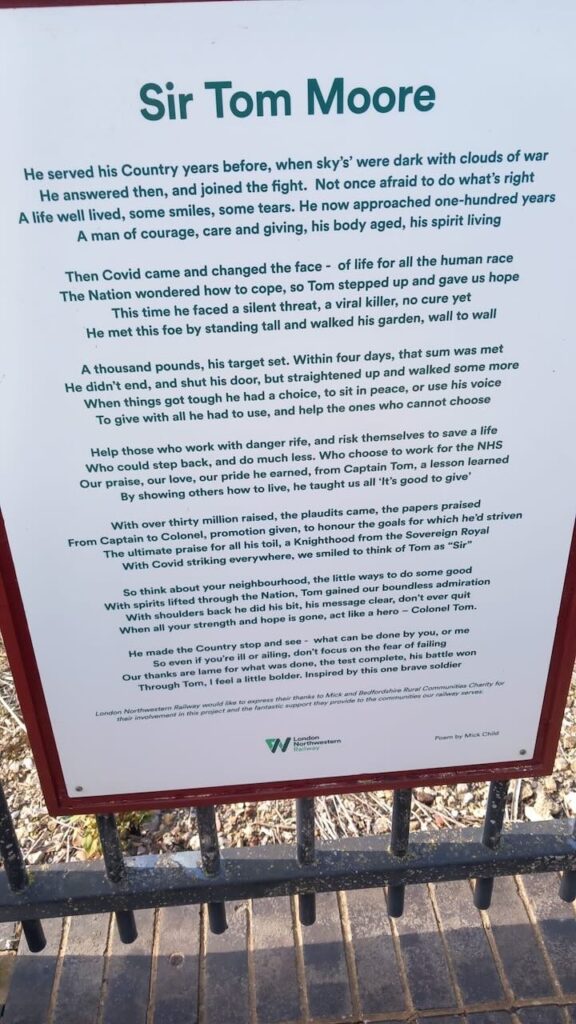
By now we were well over halfway through the ramble. After lunch we continued around the edge of the forest along shady tracks with occasional seats carved of of logs with various patterned shapes. A mile and a bit later we reached Millbrook station in good time for the Bedford train. Attached to the platform fences were some information boards about Captain Sir Tom Moore, a local hero during COVID times, including some lovely poetry. We all boarded the train to Bedford. At Bedford station I directed most of the party to the next fast London train and we said our goodbyes as they boarded.
Geoffrey
Photos by Geoffrey and Mary