I arrived at Euston early and Geoffrey did too so we were able to have a chat about railways while waiting. We were a bit late arriving at Berkhamsted, having been held up by a slow train ahead of us. 12 of us set off from Berko, after a further delay while I fiddled with my new pole. I had been worried about a narrow muddy path on one section of the walk. However what was muddy in March was bone dry in June and I didn’t need to use my steep alternative route.
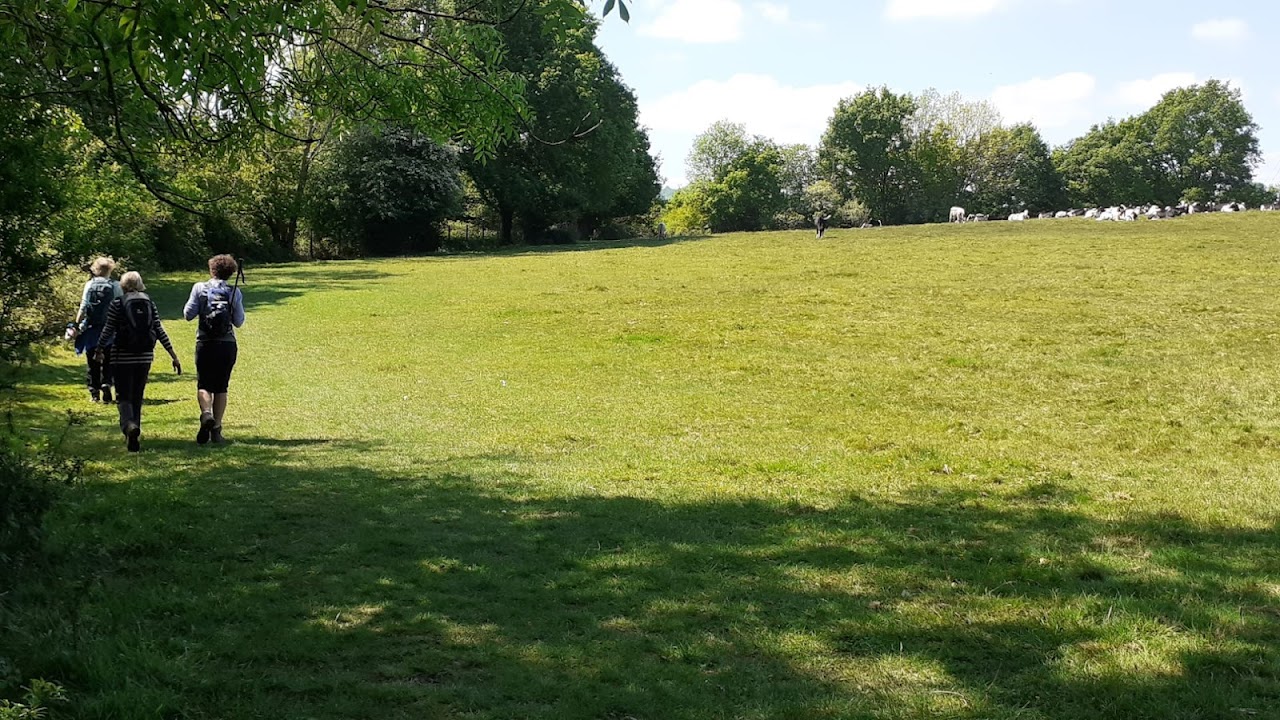
We started the steady climb to Berko Common, enjoying extensive views on a bright sunny day. Although I have done the walk several times I still managed to take a wrong path. Fortunately I was able to correct my mistake with the aid of my OS Maps app. I attribute my mistake to the fact that the map shows a path which does not exist on the ground, and realise that some people might see a slight contradiction here.
Fifteen blind ramblers and helpers and nine Polyramblers enjoyed a wonderful day in Kew Gardens. We started by ascending to the Temple of Aeolus, the god of wind, who thankfully was not active that day. In fact it was beautifully sunny between the clouds! Walking back through plant evolution in the Evolution Garden we reached the colourful Rock Garden where we listened to the waterfall before passing through the Alpine House, describing the insectivorous plants in the pond on the way. We smelled crushed fallen leaves of the Eucalyptus trees before experiencing the different climatic zones of the Princess of Wales Conservatory. Homage was paid to the bee at ‘The Hive’ a structure created by Wolfgang Buttress which several of us entered to further explore and listen to the local bees humming in the key of C major!
On a rather grey Sunday morning, a very respectable turn-out of twenty-five members met at Stratford Station for the walk with a further two joining enroute. The Line is London’s first dedicated public art walk. It starts in the Queen Elizabeth Olympic Park and that’s where the group joined it, alongside the Waterworks River. The first of twenty exhibits was the AccelorMittal Orbit by Anish Kapoor, then its slide by Carsten Holler followed by a series of Madge Gill works under a railway bridge. Soon after, we reached the Greenway with a distinct aroma signalling the Northern Outfall Sewer beneath! After crossing Stratford High Street, we joined the Three Mills Wall River towpath with a tall structure in the style of the 2012 Olympic torch on the opposite bank. Continue reading THE LINE WALK: STRATFORD TO NORTH GREENWICH – 15 MAY→
Fourteen Poly Ramblers undertook the challenge of a strenuous 13 mile/22k figure of 8 walk from Haslemere.
The weather was perfect for walking, partly sunny with good visibility. We walked through Haslemere which has been decked out in 70th Jubilee bunting, and then ascended up towards Black Down following the Serpent’s way (a well signposted trail). The terrain was varied, walking through fields then shady woods until we got to the Down. The hill was kind, spreading out the ascent and everyone made it comfortably. On the Down there was a magnificent view to the west, although there were not many obvious landmarks. 10 minutes later, lovely views from the Temple of the Winds viewpoint from North West to South West. There were views of the South Downs. This was a good spot for mid-morning refreshments.
We then, after negotiating random cows took a lovely return down to Haslemere through beech woods. We had a short break for lunch, finding some outside seating or in one of the many cafes/hostelries. There was an option at this point to cut the hike short, but pleased to say there were no takers. Continue reading HASLEMERE DOUBLE LOOP TO BLACKDOWN AND HINDHEAD – 21 MAY→
On a truly beautiful morning, 9 of us arrived at East Grinstead. The first bit of the walk almost took us back in time, beginning with tarmac pavement by a noisy road, then a quiet road, then a path, a track & eventually the slightly trodden grasses across a field which told us that other beings had been there. We had several lovely sightings of Weir Wood reservoir sparkling in the morning light, we passed a farm where they were preparing for a wedding celebration & someone warned us of a swarm of bees nearby & then we skirted the water, half in fields & half in light woodland.
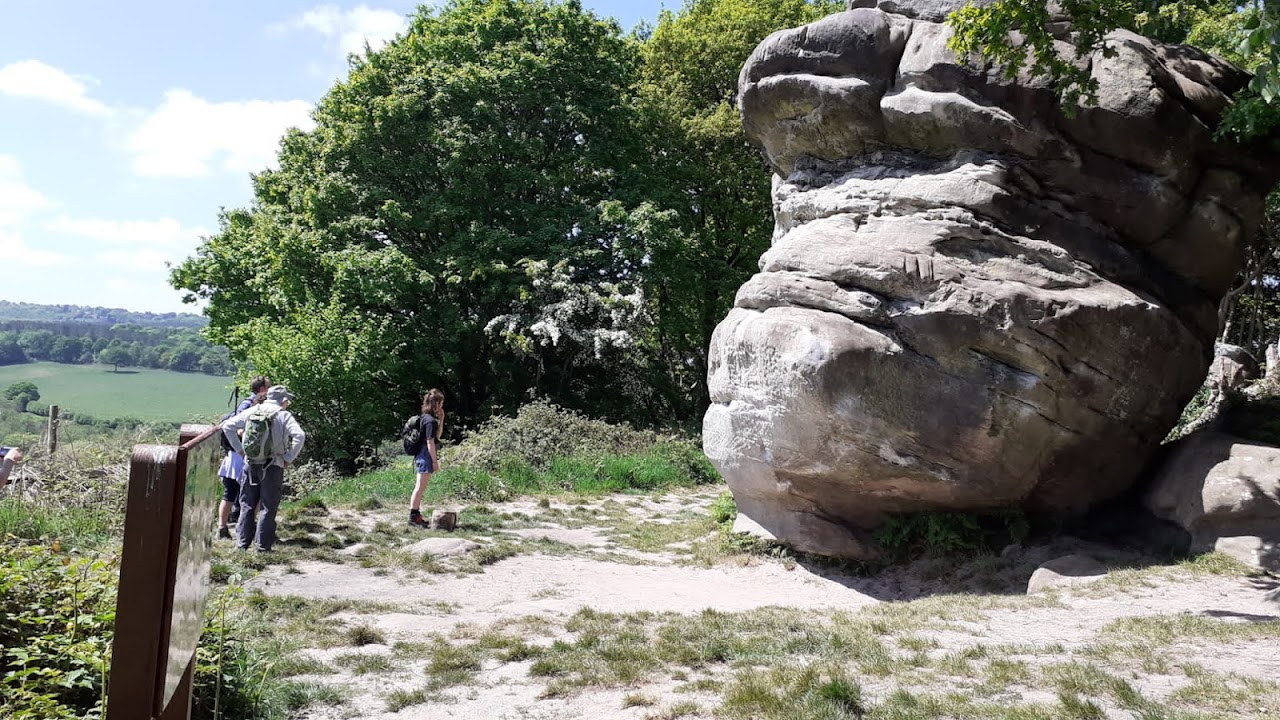
It was all very quiet with few people out on that lovely morning apart from ourselves. At the Stone Farm Rocks (SSSI), there were a few young people trying to climb them or just enjoying being there but really, until we hit the Cat Inn at West Hoathly, we had the world almost to ourselves. After lunch in the churchyard & swift pints in the pub, we climbed up past Gravetye Manor & walked in the cool, mostly deciduous woods enjoying the sunlight through the trees & the early summer smells. It was a mixture of meadows & light woodland after that until we hit Worth Way, the old railway line that goes to East Grinstead station so there was no horrible road-walking at the end to spoil the day.